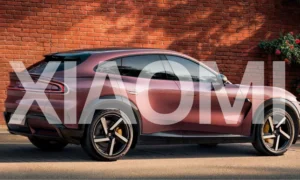
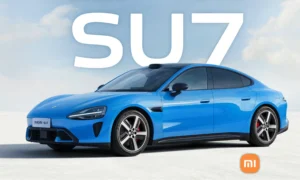
Xiaomi No Longer “Chasing” Tesla: SU7 and YU7 Highway Efficiency Test Analysis
The electric vehicle (EV) market in China has seen a significant shift. For years, the local industry was focused on catching up to Tesla. However, a recent controlled high-speed energy consumption test conducted by Autohome suggests that the era of “chasing” is over. Xiaomi, just two years into the automotive sector, has demonstrated that its SU7 and YU7 models can compete head-to-head with the established Model 3 and Model Y in thermal efficiency and energy management. This is a game-changer, proving Xiaomi is serious about technology and the future of EVs.
The Toughest Test: Highway Efficiency Methodology
City driving isn’t enough to accurately assess EV efficiency due to regenerative braking. The real “acid test” is highway driving. Autohome designed a rigorous protocol to eliminate external variables:
- Constant Speed: 120 km/h (where aerodynamic resistance significantly impacts consumption).
- Identical Conditions: Same weight load and cabin temperature across all vehicles.
This controlled environment is crucial for determining drivetrain efficiency and pure aerodynamics, beyond the often-optimistic CLTC cycle figures. You can read more about the test methodology on Autohome’s website.
Xiaomi’s Challenge to Tesla
Results: Tesla vs. Xiaomi (kWh/100 km)
The results revealed some surprising numbers. While Tesla still holds the crown for pure efficiency, the gap with Xiaomi has narrowed to an almost insignificant margin, especially considering the differences in size and equipment.
| Model | Type | Consumption (kWh/100 km) | Efficiency (Miles/kWh) | Analysis |
|---|---|---|---|---|
| Tesla Model 3 | Sedan | 20.8 | ~3.0 | The undisputed leader. Its minimalist architecture and lower weight remain the benchmark. |
| Tesla Model Y | SUV | 21.8 | – | Excellent management for its volume. |
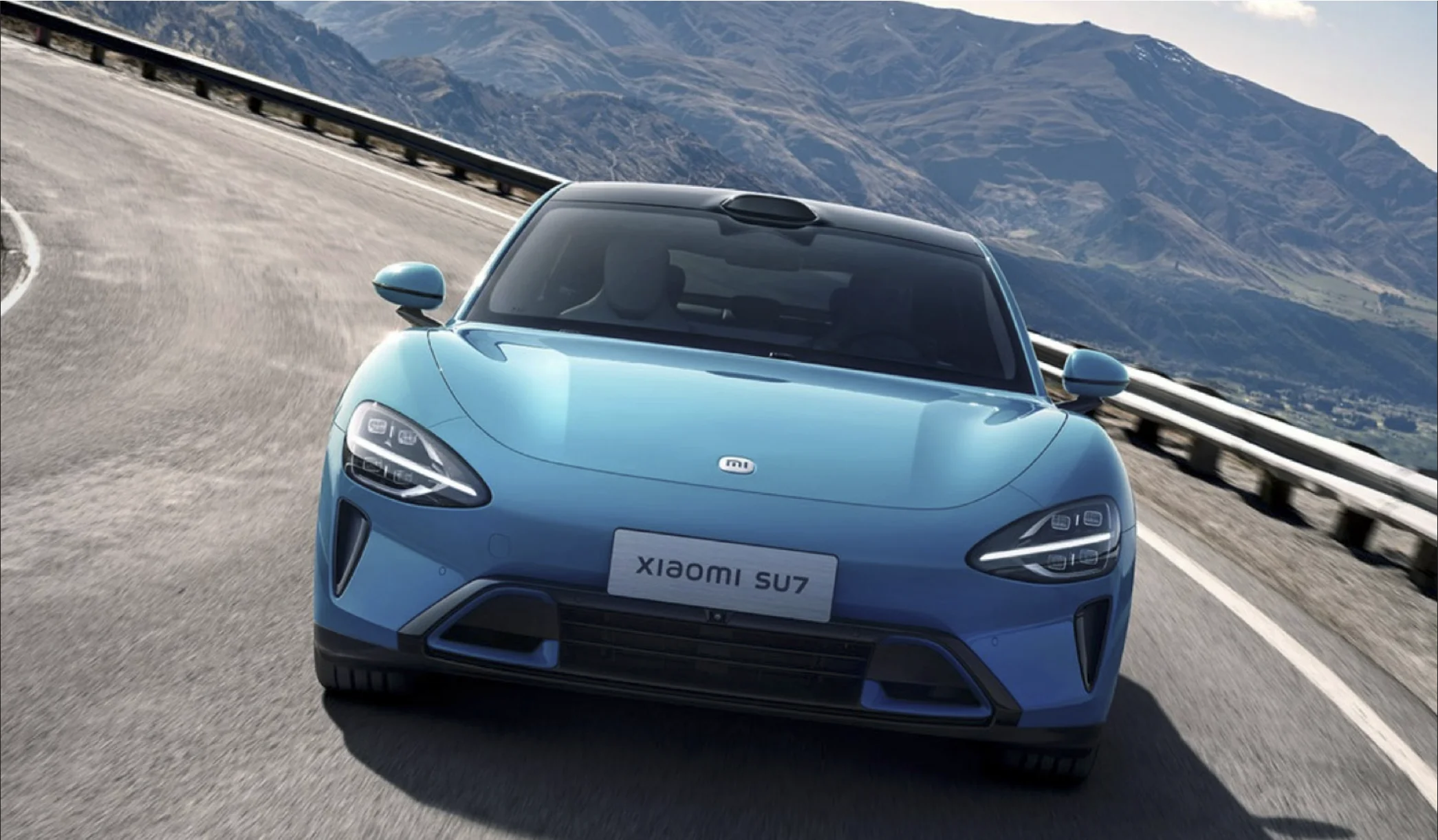
| Xiaomi SU7 | Sedan | 22.5 | – | A standout result. Despite being a larger, more “premium” and heavier vehicle than the Model 3, it’s only 1.7 kWh different. |
| Xiaomi YU7 | SUV | 25.9 | – | Higher consumption, typical of a larger SUV with greater dimensions and weight compared to the Model Y. |
The Xiaomi No Longer “Chasing” Tesla narrative is becoming clearer with these results.
Technical Interpretation: Xiaomi’s Engineering Prowess
The Xiaomi SU7 achieved a consumption of 22.5 kWh/100 km. While higher than the Model 3 (20.8 kWh), the figure is remarkably competitive. In automotive engineering, achieving this efficiency in a car with more equipment and size indicates top-tier battery thermal management and a world-class aerodynamic coefficient (Cd). Lei Jun, CEO of Xiaomi, emphasizes that these results demonstrate that domestic brands now meet “industry standards side-by-side” with Western pioneers. This is definitely a win for Xiaomi news.
Market Context: Profitability and Maturity
The technical data gains even more relevance when analyzing financial performance:
- Speed to Profitability: It took Xiaomi approximately two years to make its EV business profitable (achieved in the last quarter).
- Historical Comparison: It took Tesla a decade in the market to register its first profitable quarter.
While Tesla paved the way and educated the consumer (making Xiaomi’s job easier, as Lei Jun admits), Xiaomi’s ability to match specifications and lower prices demonstrates accelerated industrial maturity. This rapid growth and profitability highlights Xiaomi’s commitment to innovation.
The Xiaomi Factor: A New Era for EVs?
The Verdict: The End of Hegemony?
Lei Jun has been clear: “Chinese electric vehicle brands no longer look up to Tesla.” The confidence shown on demanding tracks indicates that the competition is no longer about price, but about core technology: energy consumption and thermal management. Have a look at similar analysis of the POCO brand as well.
However, it’s important to maintain perspective. Although Xiaomi is close, Tesla remains extremely efficient. Additionally, globally, the absolute leader in efficiency remains Lucid, whose custom motors achieve over 5 miles per kWh (approx. 12.4 kWh/100km), albeit at a much higher price than Xiaomi or Tesla.
Conclusion: Xiaomi Joins the EV Efficiency Elite
The Autohome test validates that Xiaomi isn’t just an electronics manufacturer making cars, but a legitimate automaker capable of optimizing energy to market-leading levels. For the consumer, this means the technological gap between the pioneer (Tesla) and the challenger (Xiaomi) has closed, leaving the purchase decision more in the hands of personal taste and budget than technical superiority. If you’re in the market for a new EV, it’s worth considering all your options, including the Xiaomi Car. Maybe the next HyperOS update can even improve it further.