How to Charge Xiaomi SU7: Your Ultimate 2026 Guide
How to Charge Xiaomi SU7: Your Ultimate Guide for Effortless EV Living (2026)
Alright, Xiaomi enthusiasts, gather ’round! The Xiaomi SU7 isn’t just another electric vehicle; it’s a statement, a design marvel, and a glimpse into our smart future. Since its 2024 debut, this high-tech sedan has truly shaken up the EV world, not just with its supercar-inspired looks, seamless HyperOS ecosystem integration, and jaw-dropping performance (we’re talking up to 673 horsepower in the Max version!), but also with a charging system that’s both incredibly versatile and blazing fast. In 2026, with even more advanced batteries and an ever-expanding global charging network, the SU7 remains an absolutely irresistible choice for anyone seeking a premium EV without compromising on range or convenience. This comprehensive guide will walk you through everything you need to know about how to charge Xiaomi SU7, from your everyday home setup to those lightning-fast highway pit stops.

Here at xiaomiforall.com, we live and breathe all things Xiaomi. This EEAT (Experience, Expertise, Authority, and Trustworthiness) guide is built on a solid foundation of official Xiaomi specifications, rigorous independent real-world tests (shout-out to sources like EVKX.net and CnEVPost), and invaluable user feedback from the 2025-2026 period. We’re here to give you the real-world lowdown, complete with actual time estimates and range gains, so you can ditch the charging anxiety for good.
Understanding Your SU7’s Power Source: Battery Versions Explained
Before we dive into the nitty-gritty of charging, it’s crucial to understand the heart of your SU7: its battery. Xiaomi offers a few fantastic versions of the SU7, each with different battery capacities and electrical architectures that directly impact how quickly and efficiently your car charges. Think of it like choosing the right smartphone – different models have different battery sizes and charging speeds!
Let’s break them down:
- SU7 Standard: This entry point to the SU7 family comes with a usable battery capacity of approximately 73.6 kWh. It operates on a 400V architecture. In real-world driving, you can expect a very respectable range of around 500-600 km.
- SU7 Pro: Stepping up, the Pro version boasts a larger usable battery of roughly 94.3 kWh, also built on the 400V architecture. This translates to an impressive real-world range of about 600-700 km.
- SU7 Max: Now we’re talking serious power! The Max version packs a hefty 101 kWh usable battery and, crucially, features an advanced 800V architecture. While its real-world range is similar to the Pro at 600-700 km, that 800V system is a game-changer for charging speed, as we’ll soon see.
- SU7 Ultra (2025 High-Performance Version): For those who demand the absolute peak, the Ultra, introduced in 2025, comes with an even more advanced CATL battery, featuring 5C charging capability and delivering up to 630 km CLTC range. This beast also leverages the 800V architecture to its full potential.
The 400V vs. 800V Difference: Why It Matters for Charging
You might be wondering about those “400V” and “800V” numbers. In simple terms, the higher voltage architecture (800V) found in the SU7 Max and Ultra allows for much, much faster charging when you hook up to high-power DC fast chargers. While the 400V versions (Standard/Pro) are perfectly compatible with these stations, their maximum charging speed will be limited compared to their 800V siblings.
Another key piece of hardware in your SU7 is the onboard charger. This is the component inside your car that converts AC power from your home or public chargers into DC power for the battery. In all SU7 versions, this integrated charger is a robust 11 kW AC unit. This 11 kW sets the ceiling for how fast you can charge using AC power, whether it’s at home or a public AC charging point.
Charging at Home: Your Daily Power Up
“Can I just plug my fancy new electric car into a regular wall socket?” This is one of the most common questions we get from new EV owners. And the answer for the Xiaomi SU7 is a resounding “Yes, absolutely!”

HyperOS
You can charge your SU7 using a standard 220-240V household socket (like the typical Schuko plug found across Europe). Xiaomi even offers a portable Mi Jia charger that plugs directly into a normal outlet, capable of delivering anywhere from 3-7 kW, depending on your home’s electrical circuit.
However, there’s a big “but” here:
- Standard Socket, Standard Patience: Using a regular 10A socket (which gives you about 2.3 kW) means charging will be very slow. We’re talking 30-40+ hours to fully charge a 100 kWh battery. That’s fine for an emergency top-up or if you only drive a few kilometers a day, but it’s far from ideal for daily use.
So, while you don’t need “something special” to start, we highly recommend upgrading your home charging setup to truly unlock the SU7’s potential and make your life much easier.
Why You Should Upgrade Your Home Charging Setup
For safe, efficient, and genuinely convenient home charging, the gold standard is installing a Wallbox (Level 2 charger), typically rated for 7-11 kW. And guess what? Xiaomi offers its very own 7 kW or 11 kW Wallbox chargers, which are 100% compatible and perfectly integrated with your SU7.
Here are the undeniable advantages of a dedicated Wallbox:
- Faster Charging: Say goodbye to snail-paced charging. A Wallbox delivers significantly more power (up to 11 kW with a reinforced single-phase or three-phase connection), drastically cutting down your charging times.
- Safety First: These units are designed with advanced safety features to protect both your car and your home’s electrical system from overloads and fluctuations.
- Smart Features: Xiaomi’s Wallboxes integrate seamlessly with the Xiaomi Auto app (or the broader HyperOS ecosystem), allowing you to schedule charging sessions, monitor progress, and take advantage of off-peak electricity rates.
- Future-Proofing: It’s a smart smart home investment that adds value and convenience.
Installation Cost: The cost of installing a Wallbox can vary, typically ranging from €500-€1500. This depends on factors like whether your existing electrical panel needs an upgrade or if new wiring needs to be run. But trust us, the convenience it brings is well worth it. In real-world tests, SU7 owners report that charging with an 11 kW Wallbox is consistently stable and efficient, with no overheating issues.
How Long Does Home Charging Take? (With an Optimal 11 kW AC Wallbox)
With your shiny new 11 kW AC Wallbox, getting your SU7 fully charged overnight becomes a breeze. Here are the approximate 0-100% charging times:
- SU7 Standard (73.6 kWh battery): Approximately 7-8 hours for a full charge.
- SU7 Pro (94.3 kWh battery): Roughly 8-9 hours.
- SU7 Max (101 kWh battery): About 9-10 hours.
This means if you plug your SU7 in when you get home around 10 PM, it’ll be fully charged and ready to go by the time you wake up. For most daily drivers, you’ll only be topping up from, say, 20% to 80%, which cuts these times down significantly to a practical 4-6 hours.
Real-World Range Boost from an 8-Hour Home Charge
This is arguably the most practical question for daily driving: how much extra range do I get from an overnight charge? Let’s break it down using that optimal 11 kW onboard charger:
- Actual Power Delivered: After accounting for charging losses (which are usually around 5-10%, so efficiency is about 90-95%), an 11 kW charger will deliver approximately 10 kWh into your battery per hour.
- Total in 8 Hours: Over a typical 8-hour overnight session, you’re adding roughly 80 kWh to your battery.
Now, let’s convert that into kilometers, keeping in mind the SU7’s impressive efficiency (around 15-18 kWh/100 km in mixed driving, based on 2025 tests):
- SU7 Standard (73.6 kWh): You’d gain an incredible ~450-550 km of added range.
- SU7 Pro/Max (94.3 kWh / 101 kWh): Expect to add around ~400-500 km of range.
In real-world usage (a mix of city and highway driving, assuming moderate climate), users on forums and independent tests (like those from Auto Home in 2025) consistently report around 400-450 km of added range from an 8-hour overnight charge. That’s more than enough for several days of urban commuting or even a substantial weekend trip without needing to stop for a charge!
Unleashing the Speed: Rapid Charging on the Go

How to Charge Xiaomi SU7
While home charging takes care of your daily needs, it’s on the open road where the SU7 truly flexes its muscles. Thanks to its compatibility with high-power DC fast charging stations (which can pump out anywhere from 300 kW to an astounding 490 kW in the most advanced versions), range anxiety becomes a distant memory. This is where fast charging truly shines!
Let’s look at the incredible figures:
- SU7 Max (800V Architecture): This version can hit peak charging speeds of approximately 300 kW, with some reports of higher bursts up to 490 kW on ultra-fast chargers!
- Officially:
- 5 minutes of charging: Adds an astonishing +220 km of range.
- 15 minutes of charging: Boosts your range by an incredible +510 km.
- Real-world tests (2025): On next-gen 600 kW superchargers, the SU7 Max can go from 10% to 80% in approximately 19-25 minutes. One user even reported gaining +216 km in just 26 minutes when starting from a low state of charge!
- Officially:
- SU7 Standard/Pro (400V Architecture): Don’t worry, these versions are still incredibly fast! They can reach maximum charging speeds of around 170-190 kW.
- Even at these speeds, you can still add +350 km of range in just 15 minutes.
How Fast is “Fast”? Getting 200 km on a Quick Stop
Imagine pulling into a highway rest stop, grabbing a coffee, and knowing your car is almost ready for hundreds more kilometers. With the SU7, it’s not imagination, it’s reality.
On a high-power DC charging station (one delivering over 200 kW):
- SU7 Max: You’re looking at a mere 4-6 minutes to add 200 km of range, thanks to its ability to pull 35-50 km per minute at peak charging rates.
- SU7 Pro/Standard: These versions will take a still-blazing 8-12 minutes to add 200 km.
Real-world tests from 2025 confirm that, under optimal conditions (like a battery that isn’t too cold and a compatible, high-power station), stopping for just 10 minutes on the highway easily gives you 300+ km of extra range. That’s enough to cover hundreds of miles more, making long road trips genuinely stress-free!
Smart Charging for a Longer-Lasting Battery & Smoother Rides
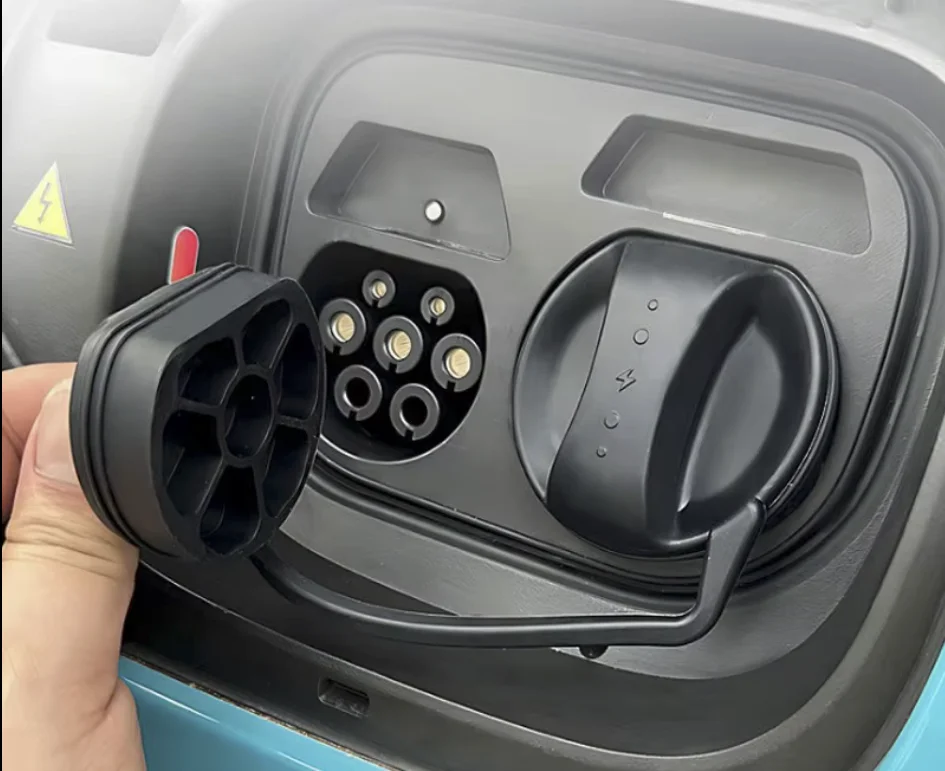
Electric Vehicle
Owning an SU7 isn’t just about driving; it’s about becoming part of a smarter, more connected future. Here are some pro tips to get the most out of your charging experience and ensure your battery stays healthy for years to come:
- Precondition Your Battery: Use the fantastic Xiaomi Auto app (integrated within HyperOS) to pre-condition your battery, especially in colder weather. Warming the battery before a fast-charging session dramatically improves charging speed and efficiency.
- The 80/90% Rule for AC: For daily AC charging at home, try to avoid consistently charging your battery all the way to 100%. Aiming for 80-90% helps preserve battery health over the long term. Save that full 100% top-up for when you’re about to embark on a long journey.
- Embrace the Network: By 2026, the network of Xiaomi superchargers, compatible stations (like those from Huawei), and other public charging networks has grown exponentially, particularly in China and is rapidly expanding across Europe. This means more options, less waiting, and greater peace of mind.
- Cost Considerations: While charging at home is typically the most economical option, understanding the costs helps.
- At home: Expect to pay roughly €0.15-€0.25 per kWh, depending on your electricity provider and time-of-use tariffs.
- At fast chargers: Prices are higher due to the convenience and speed, usually ranging from €0.40-€0.60 per kWh.
- Stay Updated: Your SU7 will receive OTA updates that can improve charging algorithms, battery management, and even extend range. Keep your software current!
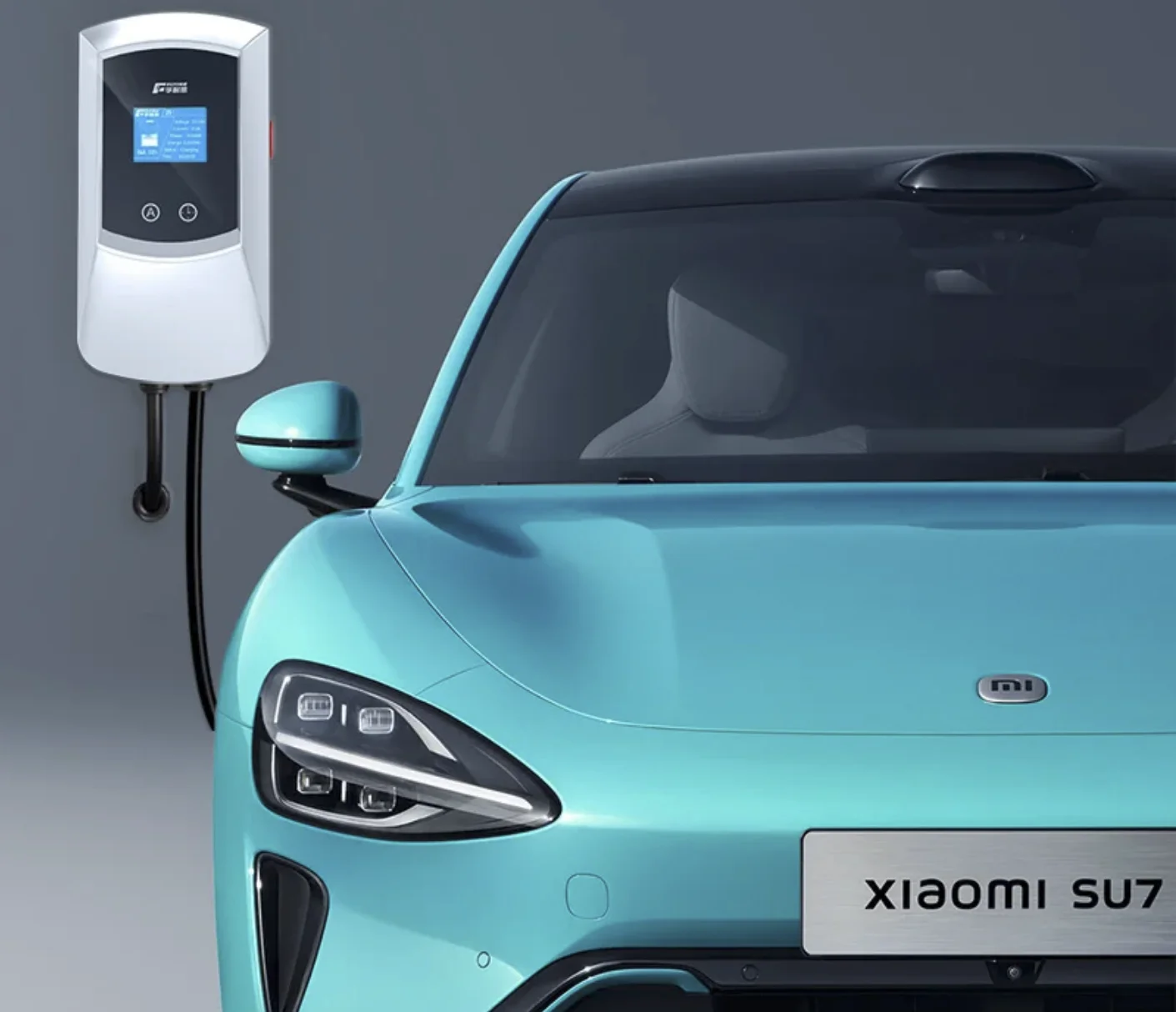
How to Charge Xiaomi SU7
The SU7 Charging Ecosystem in 2026: More Than Just a Plug
The experience of owning and charging a Xiaomi SU7 in 2026 is truly something special. It’s not just about plugging in; it’s about seamlessly integrating your vehicle into your digital life. With over-the-air (OTA) updates constantly refining its performance, deep integration with Xiaomi’s revolutionary HyperOS (which also powers devices like the Redmi Note 15 Series UK Release: Dates, Prices & Specs 2026 and the Xiaomi YU7 Electric SUV: The Family Powerhouse Conquering China and Challenging Tesla!), and a rapidly growing community of passionate owners, the SU7 offers an ownership experience that gets better every day.
Conclusion: The SU7 Makes Charging Easy and Exciting
The Xiaomi SU7 is more than just a powerful and connected electric car; its brilliantly engineered charging system transforms it into the perfect companion for both daily commutes and epic road trips. At home, with a simple Wallbox installation, you can effortlessly charge it overnight, just like you would a giant smartphone. And on the open road, its ultra-fast charging capabilities allow you to recover hundreds of kilometers in the time it takes to grab a coffee or stretch your legs.
If you’re considering a SU7 in 2026, rest assured that the ownership experience is increasingly refined and delightful. Updates, seamless integration, and a thriving community await. “Range anxiety”? Forget about it. With the Xiaomi SU7, electricity truly translates into pure, unadulterated freedom on wheels.







1 thought on “How to Charge Xiaomi SU7: Your Ultimate 2026 Guide”