REDMI Book Update: Linux 6.18 Unleashes Native AI Button & More!
The latest Linux kernel, version 6.18, has arrived, and it’s a game-changer, especially if you’re rocking a REDMI Book! This isn’t just another incremental update; it’s a major leap forward that brings native support for features like the AI button, RGB keyboard controls, and even fan management directly to your Xiaomi laptop. Get ready to ditch those workarounds and experience your REDMI Book like never before. Linux 6.18 is here to make your life easier and your laptop run smoother! This Kernel update is great for Xiaomi users.

Linux 6.18: A Kernel Revolution for Your REDMI Book
The open-source community is buzzing about the release of Linux 6.18, officially unveiled by Linus Torvalds on November 30, 2025. This version boasts a whopping 11,974 commits, making it a strong contender for the next Long Term Support (LTS) release. What does this mean for you? Expect enhanced stability and performance, particularly on multi-core systems and portable devices like the REDMI Book. One of the most exciting aspects is the native support for specialized keys on these laptops.
What’s New in Linux 6.18?
- Native REDMI Book Support: Finally, seamless integration for function keys, keyboard backlighting, and the dedicated AI button.
- Performance Boost: Optimized memory management and scalability for modern AI and cloud computing workloads.
- Hardware Support Expansion: Improved drivers for various devices, including GPD handhelds, ASUS ROG Ally, and Lenovo Legion Go 2.
- Enhanced Security: Network subsystem optimizations and improved BPF security features.
Memory Management Marvel: Sheaves and Multi-Core Performance

tech news
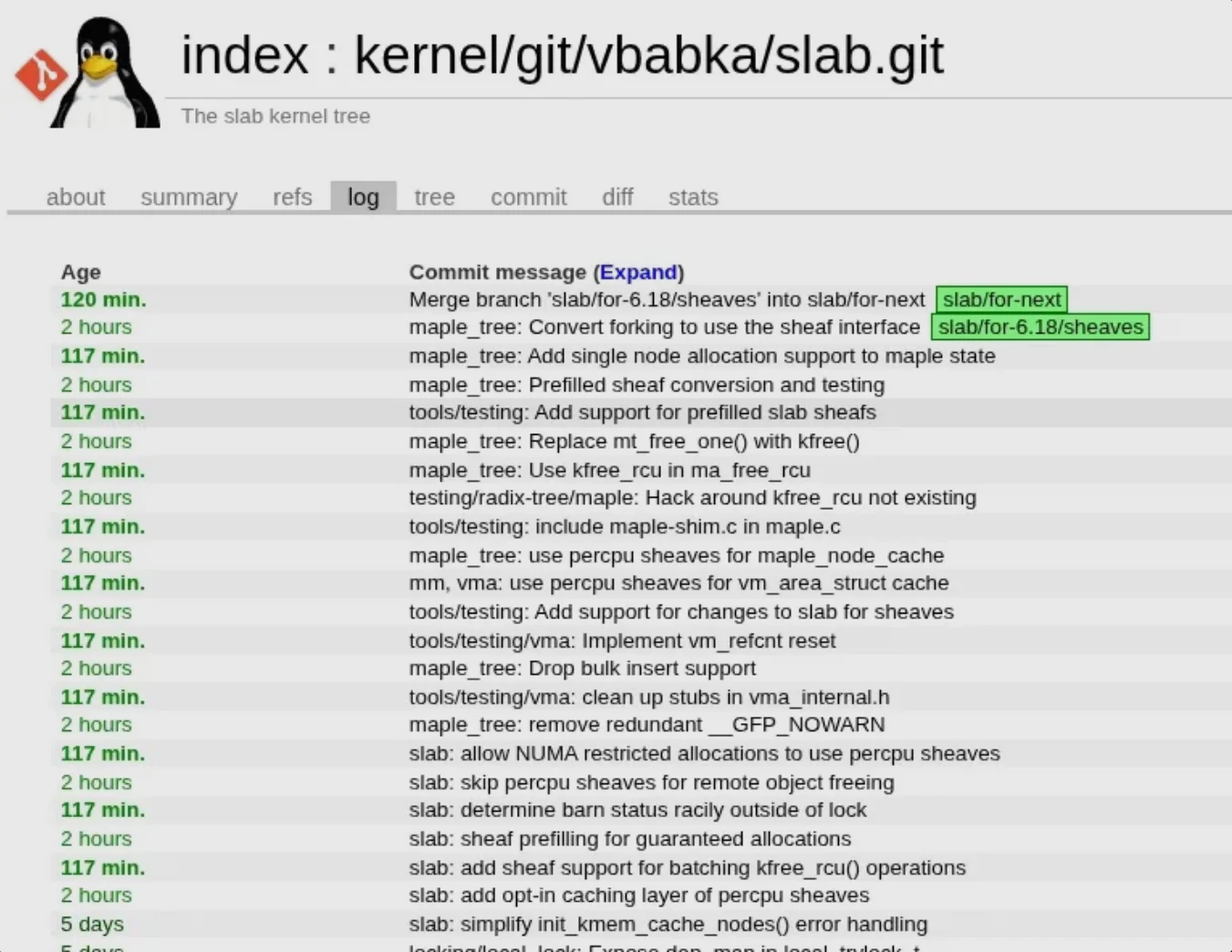
One of the most significant advancements in Linux 6.18 lies in its memory architecture. The introduction of “Sheaves,” a per-CPU core cache technology developed by Google, revolutionizes the SLUB allocator. By creating independent local caches for each processor, Sheaves dramatically reduces lock contention on systems with numerous cores, such as AMD EPYC or Intel Xeon servers.
Early tests by Phoronix reveal impressive improvements of up to 30% in multi-threaded workloads. While memory consumption sees a slight increase (around 2.4% in idle scenarios), the performance gains in high-traffic environments like databases and hypervisors are substantial. Sheaves accelerates the allocation of small objects, resulting in smoother multitasking.
File System Changes: Bcachefs Gone, exFAT Soaring
The file system landscape in Linux 6.18 sees both progress and controversy. The complete removal of Bcachefs, an experimental copy-on-write file system, marks the end of a turbulent chapter. Citing concerns over stability and late patches, Torvalds decided to remove its 117,000 lines of code. Users of Bcachefs will need to migrate to independent modules.
On a brighter note, exFAT receives a major optimization, with devices like SD cards and USB drives loading up to 16 times faster. XFS now features online fsck by default, enabling automatic error correction without unmounting volumes. Btrfs gains support for block sizes larger than the page size, improving efficiency on large disks. This will come in handy for many Smart Phone users.
Key File System Updates:
- Bcachefs Removal: No longer included in the kernel.
- exFAT Optimization: Up to 16x faster loading for external storage.
- XFS Online fsck: Automatic error correction without unmounting.
- Btrfs Block Size Increase: Improved efficiency on large disks.
Xiaomi REDMI Book Support: Native AI Button & More!
How the… works REDMI Book Update
Here’s the news that REDMI Book owners have been waiting for: Linux 6.18 brings native support for these laptops! This includes full functionality for function keys (Fn), keyboard backlighting, and, most notably, the dedicated “AI” button.
Previously, this button was primarily designed for activating AI assistants on Windows. Now, in Linux, it maps to the KEY_ASSISTANT keycode, allowing you to customize it to launch tools like GNOME Assistant or integrate with open-source AI models.
The new “redmi-wmi” driver, developed by Gladyshev Ilya, addresses long-standing issues where the keyboard would fail or special keys would be unusable. This applies to models like the REDMI Book Pro 14/15 2022 Ryzen and newer versions, extending compatibility to performance profiles (balanced, high performance, silent). Users have reported that keyboards were “inoperable” on kernels prior to 6.0, making 6.18 a welcome upgrade for Linux enthusiasts with affordable Chinese hardware. For more information, you can check out this article.
REDMI Book Key Features:
- Native AI Button Support: Customizable keycode for launching AI tools.
- Function Key Integration: Full functionality for volume, brightness, and other controls.
- Keyboard Backlighting Control: Adjust the keyboard backlight to your preference.
- Performance Profile Switching: Easily switch between balanced, high performance, and silent modes.
Gaming and Hardware Enhancements Beyond REDMI
Gamers and laptop users alike will appreciate the specific optimizations included in Linux 6.18. Support for monitoring controllers in GPD devices enhances fan and sensor control. Interrupt issues have been resolved on ASUS ROG Ally and Lenovo Legion Go 2, reducing latency during gaming sessions. The Sony DualSense controller now fully supports its audio jack, enabling automatic output switching and volume/microphone adjustments.
On the graphics front, the Nouveau driver enables NVIDIA’s GSP firmware by default for Turing and Ampere architectures, improving efficiency for open-source GPUs without proprietary drivers.
Security and Networking Improvements
Security and network enhancements are also a key part of Linux 6.18. The network subsystem has optimized UDP, resulting in a 47% improvement in reception performance. This also strengthens resilience against DDoS attacks through NUMA-aware blocking. BPF now supports signatures in dynamic programs to verify integrity before execution, and the auditing subsystem allows for multiple security modules (SELinux + AppArmor) simultaneously. These are great additions to the Kernel, especially as tech news is constantly talking about security risks.
The Future is Rust and Hybrid Storage
The integration of Rust into the kernel continues with the Rust Binder driver for future Android versions, USB bindings, and more secure APIs, reducing memory vulnerabilities. In networking, Accurate Explicit Congestion Notification (AccECN) improves TCP congestion control. A new dm-pcache target uses persistent memory as a cache for slow blocks, ideal for hybrid storage setups.
Linux 6.18: A Giant Leap for Xiaomi and Beyond
Linux 6.18 arrives at a critical moment, with 70% of the world’s supercomputers running on Linux. These improvements are driving adoption in AI and edge computing. While distributions like Ubuntu 26.04 and Fedora 43 will soon integrate it, compiling from source on kernel.org is recommended for early testing. The removal of Bcachefs has sparked debate, but the overall consensus is positive: a faster, more secure, and more accessible kernel. If you enjoy the features in the Kernel, be sure to check out the latest devices from Redmi.
In short, Linux 6.18 isn’t just an update; it’s a bridge to a future where open source embraces diverse hardware like the REDMI Book, while optimizing for extreme workloads. For Xiaomi developers, it’s a triumph: the AI button is no longer just a Windows perk. Ready to upgrade? The merge window for 6.19 is now open, with RC1 on December 14th. Don’t forget to check out the Xiaomi Buying Guide: Smartest Gifts for 2025 Christmas for the holidays!







1 thought on “REDMI Book Update: Linux 6.18 Unleashes Native AI Button & More!”