Smartwatch vs Smartband 2026: Xiaomi & Amazfit Buyer’s Guide
Smartwatch vs Smartband 2026: The Ultimate Xiaomi, Redmi, & Amazfit Buyer’s Guide
Welcome back, Xiaomi fans! In 2026, the world of wearables has truly blossomed, making smart companions indispensable for tracking our health, fitness, and daily dose of connectivity. When it comes to wrist-worn tech, two titans dominate the ring: smartwatches and smartbands. While both excel at keeping tabs on your activity and well-being, the differences are more significant than ever, especially within the vast Xiaomi ecosystem, which proudly includes Redmi and our good friends at Amazfit (powered by Zepp Health, formerly Huami, with deep historical ties to Xiaomi). This guide dives deep into the “Smartwatch vs Smartband 2026” debate, helping you pick your perfect wearable.
What’s the Deal: Smartwatch vs. Smartband?
Let’s cut to the chase: what exactly are we talking about when we say “smartwatch” and “smartband” in 2026?
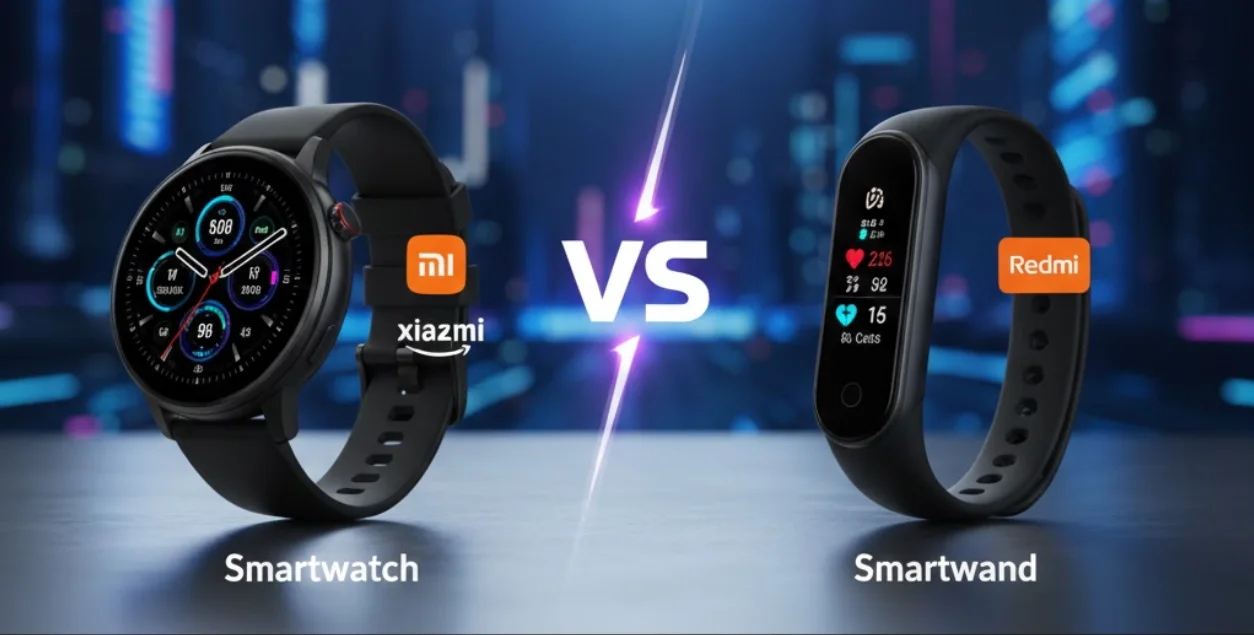
A smartwatch is essentially a mini-computer on your wrist, packing a full suite of advanced features and typically sporting a larger display that mirrors a traditional timepiece. Think of models like the Redmi Watch 5 or the premium Amazfit Balance 2. These beauties often come with independent GPS, Bluetooth calling capabilities, onboard music storage, and a more robust app experience, perhaps even running a version of HyperOS or Zepp OS. They’re designed for comprehensive interaction and connectivity.
On the flip side, a smartband is your trusty, lighter, and more discreet activity tracker. Its primary focus is on core fitness and health tracking, often boasting incredible battery life. Devices like the Xiaomi Smart Band 10 are champions of comfort for 24/7 wear, featuring smaller but incredibly efficient displays. They’re about providing essential data without getting in the way.
Now, here’s where it gets interesting: the line between these two categories has blurred quite a bit. You’ll find “bands” like the Xiaomi Smart Band 10 rocking spacious AMOLED screens, while some budget-friendly smartwatches, such as a potential Redmi Watch 5 Lite, might creep closer to smartbands in terms of price and streamlined features. It’s a dynamic market, and Xiaomi is at the forefront of this evolution, constantly offering new and exciting wearable tech.

Fitness Tracker
Smartwatch vs Smartband 2026: The Key Differences
To really grasp the nuances, let’s break down the core distinctions based on the representative models we’re seeing in the Xiaomi/Amazfit universe this year.
| Aspect | Smartwatch (e.g., Redmi Watch 5 / Amazfit Balance 2) | Smartband (e.g., Xiaomi Smart Band 10 / Amazfit Band 7) |
|---|---|---|
| Design & Size | Large screen (1.9-2.07″ AMOLED), rotating crown, more robust (40-50mm case) | Narrow screen (1.7-1.97″ AMOLED), ultra-light (<30g), discreet |
| Battery Life | 10-20 days (with GPS & AOD usage) | 14-21 days (intensive usage) |
| Smart Features | Bluetooth calls, offline music, integrated GPS, complex apps (HyperOS/Zepp OS) | Basic notifications, remote control, no independent calls |
| Health/Sport Tracking | 150+ modes, precise GPS, offline maps, AI coaching (Zepp Coach) | 150+ modes, accurate sensors, but GPS relies on phone |
| Approx. Price | €80-€300 | €40-€100 |
| Water Resistance | 5 ATM (swimming-ready) | 5 ATM (swimming-ready) |
| Display | Bright AMOLED (up to 2000 nits), Always-On Display (AOD) | Vibrant AMOLED, but smaller |
Let’s elaborate on some of these crucial points:
- Screen & Usability: Smartwatches, with their generous screen real estate, offer a buttery-smooth interaction. Models like the Amazfit Active 2, running on Zepp OS 5, are perfect for actually reading longer messages, navigating menus with ease, and enjoying more complex app interactions. It’s like having a miniature Smartphone on your wrist.
- Battery Powerhouse: When it comes to sheer endurance, smartbands are often the undisputed champions. The Xiaomi Smart Band 10, for instance, can comfortably last up to 21 days on a single charge thanks to its streamlined design and efficient display. This is a massive win for those who hate constantly thinking about charging.
- Sports Precision: For serious athletes, 2026 has seen incredible advancements in smartwatch accuracy. Amazfit, in particular, shines here with features like dual-band GPS and advanced metrics on devices like the T-Rex 3 Pro, providing unparalleled data for your workouts and adventures. When we do a tech review on these, the precision always impresses!
Diving Deeper: Pros & Cons of Each
Making a choice means weighing the good against the not-so-good. Here’s a quick rundown to help you decide which side of the “Smartwatch vs Smartband 2026” fence you land on.
Advantages of Smartwatches
- Versatility King: These devices are multi-talented. You can take calls, listen to music, and even navigate without needing your phone, especially with models sporting eSIM (though rare in the Xiaomi/Redmi lineup, some premium options might offer it).
- Immersive Display: That big screen isn’t just for show. It offers a far more engaging experience, whether you’re glancing at notifications, viewing workout stats, or interacting with apps.
- Outdoor Sport Champ: For serious outdoor activities, the integrated and precise GPS in devices like the Redmi Watch 5 or Amazfit Balance 2 is a game-changer. No phone needed, just pure, unadulterated tracking.
- Advanced Connectivity: Many smartwatches offer more sophisticated connectivity options, including Wi-Fi or even cellular capabilities in some high-end models, further untethering you from your phone.
- Extreme Personalization: From an endless array of watch faces to swappable straps, smartwatches allow for more significant aesthetic customization, letting you match your device to your outfit or mood.
- Seamless Ecosystem Integration: For fans of the Xiaomi ecosystem, a smartwatch often offers deeper integration with HyperOS (e.g., fluid notifications, smart home controls), making it a true extension of your digital life. Check out our guide on how to Optimize HyperOS Performance: Your Master Guide 2026 to get the most out of your devices!
Disadvantages of Smartwatches
- Heftier & Bulkier: The larger screen and additional components mean smartwatches are generally heavier and more noticeable on your wrist.
- Shorter Battery Life: While still impressive, if you’re constantly using GPS, Bluetooth calls, or Always-On Display, you’ll be reaching for the charger more often than with a smartband.
- Higher Price Tag: All those extra features and the more robust build come at a cost, making smartwatches a bigger investment.
- Comfort for Small Wrists: For those with smaller wrists, a bulky smartwatch can feel somewhat awkward or uncomfortable, especially during sleep.
- More Frequent Charging: While good, it’s not the “charge it once a month” kind of freedom some smartbands offer.
Advantages of Smartbands
- Ultralight & Comfy: This is where smartbands truly shine. Devices like the Xiaomi Smart Band 10 are so light and slim, you’ll barely notice them, making them perfect for 24/7 wear, even while sleeping (which is crucial for accurate sleep tracking!).
- Legendary Battery Life: Weeks without charging? Yes, please! Smartbands are fantastic for those who want to “set it and forget it” when it comes to battery anxiety.
- Budget-Friendly: If you’re new to wearables or just want basic tracking without breaking the bank, smartbands offer incredible value for money. They’re an excellent entry point into the world of connected health.
- Discreet & Unobtrusive: For many, the subtle nature of a smartband is a major plus. It provides all the essential info without drawing much attention.
- Excellent Passive Tracking: For monitoring steps, heart rate, and especially sleep, smartbands are incredibly effective and unobtrusive. The Amazfit Helio Strap Update: Enhanced Sleep & HR Tracking is a testament to how specialized these devices can be.
Disadvantages of Smartbands
- Limited “Smart” Functions: Don’t expect to make independent calls or run complex apps directly from your smartband. Their “smart” capabilities are more about delivering notifications and basic controls.
- Smaller Screen for Details: While the screens are vibrant, their smaller size means reading lengthy messages or detailed notifications can be a squint-fest.
- Phone-Dependent GPS: For outdoor workouts, smartbands typically piggyback on your phone’s GPS, meaning you still need to carry your handset for accurate route mapping.
- Basic Interface: The user experience is generally simpler and less interactive compared to a smartwatch, which might feel restrictive if you’re used to more complex gadgets.
Who’s It For? Real-World Use Cases in 2026
In 2026, the best choice in the “Smartwatch vs Smartband 2026” debate really boils down to your lifestyle, priorities, and what you expect from your wrist companion. Let’s look at some real-world scenarios, referencing our beloved Xiaomi and Amazfit devices.

Smartwatch vs Smartband 2026
Ideal Users for Smartbands
- Fitness Newbies: If you’re just dipping your toes into fitness tracking and want basic motivation (steps, calories, basic activity logging), the Xiaomi Smart Band 10 is your perfect partner. It’s light, has endless battery, and offers precise sleep and stress tracking without overwhelming you.
- Active but Discreet Professionals: For office workers, students, or anyone who wears their device 24/7 and prefers it to blend in, a smartband is ideal. It provides passive monitoring without constant distractions.
- Casual Athletes: Urban joggers or gym-goers who always carry their phone anyway will find the connected GPS feature on devices like the Smart Band 10 works perfectly fine for their needs.
- Sleep Trackers Extraordinaire: For users who prioritize comprehensive sleep analysis, smartbands like the Amazfit Band 7 excel due to their unparalleled comfort during the night. You’ll barely feel it there!
Ideal Users for Smartwatches
- Serious Athletes & Adventurers: Runners, cyclists, hikers, and anyone needing independent GPS, advanced metrics, and perhaps even offline maps will gravitate towards a smartwatch. The Amazfit Balance 2 or Redmi Watch 5 offers features like AI coaching and robust outdoor tracking.
- Connected Professionals: If you need to answer calls, control music, or manage your calendar without constantly pulling out your phone, the Bluetooth calling and deeper app integration of a Redmi Watch 5 are invaluable.
- Tech Enthusiasts & Xiaomi Ecosystem Fans: For those who love being at the cutting edge of technology and want seamless integration with their Xiaomi devices running HyperOS (think fluid notifications, smart home controls, etc.), a smartwatch is the way to go. You might even want to check out some of The 5 Best Xiaomi Phones 2026: Your Ultimate Guide to Smart Buys to complete your setup!
- Extreme Durability Seekers: Trail runners or anyone working in demanding environments might opt for rugged smartwatches like the Amazfit T-Rex 3 Pro, known for its multi-week battery and extreme resistance.
Here’s a quick table to match use cases with our recommended devices:
| Case of Use | Recommended Device Type | Example Device | Main Reason |
|---|---|---|---|
| Basic Daily Monitoring | Smartband | Xiaomi Smart Band 10 | Comfort and battery life |
| Intense Outdoor Sports | Smartwatch | Amazfit Balance 2 | Precise GPS, advanced metrics, maps |
| Independent Calls & Music | Smartwatch | Redmi Watch 5 | Bluetooth connectivity and storage |
| Sleep & Recovery Tracking | Smartband | Xiaomi Smart Band 10 | Lightweight, comfortable for 24/7 wear |
| Premium Style & AI Coaching | Smartwatch | Amazfit Active 2 | Advanced Zepp Coach, elegant design |

Redmi Watch
The Xiaomi and Amazfit Connection in 2026
It’s impossible to talk about the Xiaomi wearable ecosystem without giving a big shout-out to Amazfit. Developed by Zepp Health (formerly Huami), Amazfit maintains strong, intertwined ties with Xiaomi. They often share underlying technologies (like those fantastic BioTracker sensors), boast compatible apps (think Mi Fitness and Zepp App), and uphold a similar philosophy of delivering exceptional value for money.
In 2026, we see a clear, yet complementary, division: Amazfit is leaning further into the premium sports and lifestyle segment with devices like the Balance 2 and T-Rex 3 Pro, pushing the boundaries of fitness tracking and smart features. Meanwhile, Xiaomi and Redmi continue to dominate the accessible market with their Smart Band 10 and Redmi Watch 5, providing incredible tech that’s within everyone’s reach. It’s not uncommon for savvy users to own both: a comfortable smartband for daily wear and sleep tracking, and a robust Amazfit Smart Watch for dedicated workouts and adventures. This synergy ensures that no matter your need or budget, there’s a perfect device waiting for you.

Smartwatch vs Smartband 2026
Conclusion: Smartwatch or Smartband in 2026?
So, after all this talk about “Smartwatch vs Smartband 2026,” which one should you choose? If you’re all about simplicity, comfort, and amazing battery life without emptying your wallet, a smartband like the Xiaomi Smart Band 10 is simply unbeatable. It’s perfect for most people who just want essential tracking and notifications without the fuss.
However, if you crave a full suite of smart features, robust connectivity, and unparalleled sports precision, then opting for a smartwatch is the way to go. Whether it’s the budget-friendly Redmi Watch 5 or the more premium, fitness-focused Amazfit Balance 2, you’ll get a comprehensive experience. The good news is, within the expansive Xiaomi ecosystem, there are fantastic options tailored for every budget and lifestyle. Make your choice based on your daily routine and start enhancing your health and connectivity today!