Xiaomi 17 Ultra vs Galaxy A56: 2026’s Top Trending Phone Battle
Hey tech enthusiasts and Xiaomi fans! Here at xiaomiforall.com, we’re all about diving into the latest and greatest, making tech accessible for everyone. And what a start to 2026 it’s been! The smartphone world is buzzing, and GSMArena’s weekly trending chart is the place to be. This week, the mighty Xiaomi 17 Ultra has stormed its way to the number one spot, leaving competitors in its wake. But hot on its heels, proving that value and reliability are still king, is the Samsung Galaxy A56 at number two. This isn’t just a flagship vs. mid-range comparison; it’s the Xiaomi 17 Ultra vs Galaxy A56 – a true battle for mindshare in a crowded market.

Why are these two phones captivating so many folks right now? Well, the Xiaomi 17 Ultra, fresh off its late 2025 launch, represents the absolute pinnacle of flagship innovation. We’re talking professional-grade photography, a massive battery, and pure power. It’s the kind of device that makes you stop and stare. The Samsung Galaxy A56, on the other hand, announced back in March 2025, has carved its niche by offering fantastic reliability, long-term software support, and incredible value for money, all for around €479. It’s the sensible, smart choice that many are upgrading to without breaking the bank.
This deep dive will compare these two trending titans, looking at everything from their stunning displays and raw performance to their camera capabilities and battery life. We’ll pull from expert tests, user feedback, and our own hands-on impressions to help you figure out which one truly deserves a spot in your pocket. Let’s get into it!
Unpacking the Specs: Side-by-Side
Before we get too chatty, let’s lay out the crucial numbers for these two contenders. It really helps to see where they stand head-to-head.
| Feature | Xiaomi 17 Ultra | Samsung Galaxy A56 |
|---|---|---|
| Display | 6.9-inch AMOLED, 1440p, 120Hz LTPO, up to 3,500 nits | 6.7-inch Super AMOLED, 1080p, 120Hz, ~1,200 nits |
| Processor | Snapdragon 8 Elite Gen 5 | Exynos 1580 |
| RAM/Storage | Up to 16GB/1TB | Up to 12GB/256GB |
| Main Camera | 50MP 1-inch sensor (Leica-tuned) | 50MP |
| Telephoto | 200MP periscope | None (5MP macro instead) |
| Ultrawide | 50MP | 12MP |
| Battery | 6,800mAh silicon-carbon | 5,000mAh |
| Charging | Fast wired (~100W+) | 45W wired |
| Build & Protection | IP66/68/69, premium materials | IP67, Gorilla Glass Victus+ |
| Software | HyperOS 3.0 (Android-based) | One UI (Android 15+), 6 years updates |
| Price (approx.) | Starting ~$995-$1,210 | ~€479 |
Design and Build Quality: Premium Feel vs. Practical Durability

Smartphone
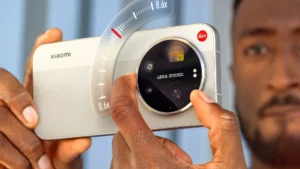
When you first lay eyes on the Xiaomi 17 Ultra, it’s clear this is a device built to impress. It absolutely exudes luxury. That iconic circular camera island is often the first thing people notice, especially if it’s the Leica edition with its cool physical zoom ring. Trust us, it’s not a flaw, it’s a feature, as we explored in our piece on the Xiaomi 17 Ultra Leica Zoom Ring. At around 230g and 8.29mm thick, it’s a substantial device, no doubt, but it feels incredibly solid and well-made in your hand. The textured finishes, like the stunning Starry Green with its mineral particles, and the premium two-tone Leica variants, receive rave reviews. One tech reviewer perfectly summed it up, saying, “It feels like holding a professional camera.” For those who appreciate precise control, especially photography enthusiasts, that tactile zoom ring is a dream come true.
The Samsung Galaxy A56, in contrast, takes a more understated, modern approach. It’s sleek, with noticeably thinner bezels and a lighter, slimmer profile than its predecessors, making it much easier to handle with one hand. Samsung opts for a brushed metal frame and appealing colors like Graphite Gray or Pink. While it might not scream “luxury” in the same way the Xiaomi does, it whispers “premium for the price.” An everyday commuter on an online forum noted, “It’s not flashy, but it feels premium for the price.” For families or those with a tendency to be a bit clumsy, both phones offer excellent durability. The A56’s IP67 rating is great for splashes and dust, holding its own against most everyday mishaps. However, the 17 Ultra’s superior IP69 rating means it can handle high-pressure water jets and more extreme conditions – perfect if you’re an adventurous user often near water or on outdoor hikes.
Display: Immersive Viewing Experiences that Pop!

Xiaomi 17 Ultra vs Galaxy A56
Alright, let’s talk screens! The Xiaomi 17 Ultra’s 6.9-inch LTPO AMOLED display is nothing short of a spectacle. With its higher 1440p resolution, adaptive 120Hz refresh rate, and an astonishing peak brightness of up to 3,500 nits, it’s truly a media consumption beast. Imagine streaming your favorite Netflix show in HDR outdoors on a sunny day – it’s absolutely effortless. Users consistently report “vibrant colors and deep blacks that pop.” Gamers, in particular, will fall in love with the adaptive 120Hz refresh rate, which ensures buttery-smooth gameplay without any stutter or lag. This is the kind of display that makes every interaction feel premium.
Now, let’s not discount the Galaxy A56. Its 6.7-inch Super AMOLED screen is no slouch whatsoever. It offers fantastic 1080p resolution, a smooth 120Hz refresh rate, and vibrant colors with HDR10+ support. Content creators and casual viewers alike praise its color accuracy and punchiness. As a student shared, “It’s great for watching YouTube on the go, bright enough for my lectures too!” However, in direct sunlight, the Xiaomi 17 Ultra genuinely pulls ahead with its superior brightness, making outdoor visibility a clear win for the flagship.
- Best for binge-watchers & outdoor use: Xiaomi 17 Ultra
- Best for balanced daily use & content creation: Samsung Galaxy A56
Performance: Flagship Power vs. Reliable Mid-Range Muscle

HyperOS
Under the hood, we find the true heart of these devices, and this is where the Xiaomi 17 Ultra vs Galaxy A56 comparison gets really interesting. The Xiaomi 17 Ultra is powered by the cutting-edge Snapdragon 8 Elite Gen 5 processor, a beast designed for raw power. This chip, combined with up to 16GB of RAM, means the 17 Ultra handles anything you throw at it with effortless grace. We’re talking heavy multitasking, intense gaming sessions, complex video editing, and advanced AI features – all without a hint of throttling. Users in demanding scenarios consistently report “buttery smooth” performance, praising its ability to keep up with their most intensive workflows. This truly is a powerhouse for serious users and power enthusiasts.
The Samsung Galaxy A56, running on the Exynos 1580, brings solid gains over last year’s model. It’s a very capable chip that handles casual gaming, everyday productivity, and general smartphone tasks with admirable efficiency. Office workers, for example, really appreciate its smooth operation: “No lags in emails or browsing, it just works,” remarked one user. While it excels in daily tasks, hardcore gamers might notice that it trails behind flagship devices like the Xiaomi 17 Ultra in terms of sustained, high-frame-rate performance in the most graphically demanding titles. For most users though, it’s more than enough.
- For serious gamers, creators, and power users: The Xiaomi 17 Ultra dominates.
- For students, professionals, and everyday reliability: The Samsung Galaxy A56 more than suffices without overheating.
Camera Showdown: The Heart of the Battle

Xiaomi 17 Ultra vs Galaxy A56
This is arguably where the Xiaomi 17 Ultra truly sets itself apart and where Xiaomi’s dedication to mobile photography technology really shines. Its collaboration with Leica delivers absolutely stunning results. The 1-inch main sensor is a game-changer for low-light performance, capturing incredible detail and dynamic range even in challenging conditions. Then there’s the truly mind-blowing 200MP periscope telephoto lens, offering insane zoom capabilities without significant loss of quality. Add to that the natural, true-to-life colors and fantastic Leica-tuned modes, and you’ve got a professional-grade camera in your pocket. “Portraits look professional, with beautiful bokeh and excellent separation,” one hobbyist photographer raved. Early video samples from reviews consistently show sharp, wonderfully stabilized footage, making it a fantastic tool for aspiring filmmakers too.
The Samsung Galaxy A56’s 50MP main camera is, for its class, incredibly capable. In good daylight, it produces vibrant, detailed shots, and Samsung’s AI enhancements work wonders for night mode, pulling out impressive detail from darker scenes. Families capturing candid moments of their kids or pets find it reliably fast: “Quick shots without blur, which is crucial with active toddlers!” However, without a dedicated telephoto lens (it relies on a 5MP macro instead), its zoom quality inevitably suffers when compared to the Xiaomi. Digital zoom can only do so much. The A56 does hold its own with clean and crisp selfies and video, which is great for social media.
User experiences really highlight this divide: travel bloggers and landscape photographers often gravitate towards the 17 Ultra for its unparalleled versatility and professional results, while social media users find the A56 “good enough” for everyday Instagram posts and TikToks.
- Daylight photography: Both are excellent, but Xiaomi’s detail and natural tones often edge it out.
- Low-light and zoom: The Xiaomi 17 Ultra wins decisively, no contest.
- Selfies and everyday video: The A56 holds its own with clean and reliable results.
Battery Life and Charging: Endurance Champions for Every User

tech review
If there’s one feature that resonates with virtually every smartphone user, it’s battery life. And in this department, the Xiaomi 17 Ultra is nothing short of a game-changer. Its massive 6,800mAh silicon-carbon battery is designed for extreme endurance. Heavy users frequently report getting 2+ days of usage on a single charge. “From morning commutes to late-night scrolling and even some gaming, it lasts forever,” said a busy parent, emphasizing its reliability. And when you do need to top up, its lightning-fast wired charging, exceeding 100W, gets you back in the game incredibly quickly. This is crucial for anyone on the go or who hates being tethered to an outlet. You can also learn more about general fast charging advancements that are making this possible for modern smartphones.
The Galaxy A56, with its substantial 5,000mAh battery, also offers impressive all-day life for moderate users. With 45W wired charging, it can reach around 55% in just 30 minutes, which is quite respectable for a mid-range device. Commuters and office workers appreciate this convenience: “I plug it in during my lunch break, and it’s ready for the evening,” noted one user, highlighting its practicality. So while the Xiaomi offers unparalleled endurance, the A56 delivers a very solid, efficient, and sufficient experience for its user base.
- For power users, heavy gamers, and frequent travelers: The Xiaomi 17 Ultra’s battery is simply unbeatable.
- For light to moderate users seeking efficient all-day power: The Galaxy A56 is a reliable and sufficient choice.
Software and Ecosystem: Longevity vs. Cutting-Edge Innovation

Xiaomi 17 Ultra vs Galaxy A56
Software is the glue that holds our smartphone experience together, and here we see two distinct philosophies. Samsung has long been praised for its commitment to software longevity, and the Galaxy A56 continues this trend, promising an impressive 6 years of updates for its One UI (based on Android 15+). This commitment appeals strongly to users who want their device to stay secure and feature-rich for many years, offering incredible peace of mind. Features like Galaxy AI further enhance daily tasks, making the user experience intuitive and smart.
Xiaomi’s HyperOS 3.0, based on Android, powers the 17 Ultra. It’s a feature-rich, highly customizable operating system packed with its own array of AI integrations and performance optimizations. If you’re a fan of deeper customization and a vibrant, evolving ecosystem, you’ll love HyperOS. We’ve even got a guide to help you optimize HyperOS performance to get the most out of your device. While Xiaomi has made strides in software support, global update timelines can sometimes vary compared to Samsung’s more uniform approach. Users valuing long-term security, consistent updates, and familiarity often lean towards Samsung, whereas those who enjoy pushing boundaries with customization and the latest HyperOS innovations often prefer Xiaomi.
Real-User Scenarios and Experiences

Smartphone
Let’s put ourselves in the shoes of different users to see how these phones fare in the real world:
- The Photography Enthusiast: This person almost certainly chooses the Xiaomi 17 Ultra. The Leica magic, 1-inch sensor, and 200MP periscope zoom are simply too tempting for capturing concerts, nature, or urban landscapes with professional-grade results. They’re willing to pay the premium for that unparalleled camera system.
- The Student on a Budget: For them, the Galaxy A56 is a clear winner. Its reliable performance for notes, browsing, and social media, combined with Samsung’s long software support and an affordable price tag, makes it a smart, no-regrets choice.
- The Avid Traveler: The Xiaomi 17 Ultra’s colossal battery and superior IP69 durability make it the ideal companion for long trips, allowing them to capture stunning photos without constantly worrying about finding a charger or accidental splashes.
- The Family User: The Galaxy A56 often wins here. Its clean, intuitive One UI, solid camera for quick family moments, and good selfies for group photos, combined with robust build quality, make it a practical and reliable device for daily family life.
From countless forums and online reviews, Xiaomi 17 Ultra owners often express a sense of “premium excitement” and satisfaction with having the best tech available. Galaxy A56 users, conversely, consistently praise its “value and reliability,” feeling confident in their smart purchase. Both are fantastic Smartphones but cater to different priorities.
Pricing and Value Proposition

Xiaomi 17 Ultra vs Galaxy A56
When it comes down to brass tacks, price is often a deciding factor. The Xiaomi 17 Ultra, starting anywhere from ~$995 to $1,210, is undeniably a flagship investment. You’re paying for top-tier features, cutting-edge innovation, and that premium, professional experience. For those who demand the absolute best and are willing to pay for it, the value is there.
The Samsung Galaxy A56, at approximately €479, offers an incredible bang-for-buck proposition in the competitive mid-range segment. It delivers a fantastic, well-rounded smartphone experience that feels more expensive than it is. It’s a testament to how far mid-range mobile technology has come.
Final Thoughts: Who Wins the Top Spot?
So, after all that, why is the Xiaomi 17 Ultra vs Galaxy A56 debate so exciting? The Xiaomi 17 Ultra absolutely deserves its #1 trending position on GSMArena. It’s a flagship masterpiece, blending innovation, raw power, and photography excellence into one breathtaking package. For those seeking the absolute best, who want a device that truly stands out, it’s virtually unmatched, living up to the hype we saw in our initial report on Xiaomi 2026 Trending Phones.
The Samsung Galaxy A56, however, is a profoundly worthy #2. It delivers a balanced, reliable, and high-value performance that resonates with millions of users worldwide. It proves you don’t need to break the bank for a fantastic daily driver.
And slipping into third place, quietly commanding attention with its refined AI and seamless ecosystem integration? The Samsung Galaxy S25 Ultra, reminding us that other premium flagships still have a significant hold on the market.
Whether you’re chasing the bleeding edge of tech, seeking the ultimate Smartphone Reviews experience, or simply looking for practical perfection, 2026 has started strong. Which of these trending champions would you choose?