Xiaomi Integrated Fan Smartphone: The 2026 Revolution?
Xiaomi Integrated Fan Smartphone. # Xiaomi’s Secret Weapon for 2026: The Integrated Fan Smartphone?
Get ready, Xiaomi fans! Whispers from the industry suggest something truly revolutionary is brewing: a smartphone with a built-in fan. Forget clunky accessories; this could be a game-changer for performance and cooling. We’re diving deep into what this means for the future of mobile tech.
The Rumor Mill is Buzzing: A Phone with a Built-in Fan
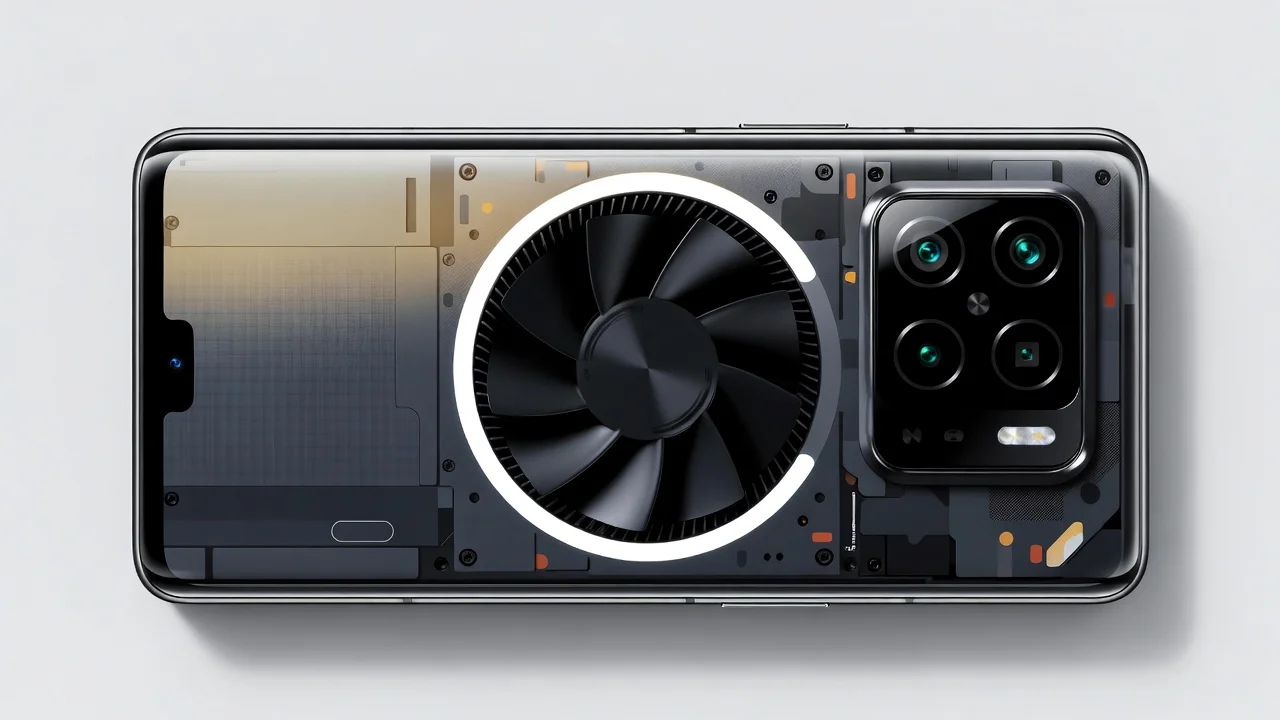
Lately, the tech grapevine has been abuzz with consistent rumors from reliable sources in the Chinese industry, like Digital Chat Station and Panda is Bald. They’re all pointing to a rather unique project at Xiaomi: a smartphone that comes with an integrated cooling fan, straight out of the box. Yes, you read that right – inside the phone. This isn’t some clip-on gadget or a bulky case; we’re talking about a genuine internal component.
Before you roll your eyes, picturing those noisy mini-turbines from older gaming phones, there are strong indications that Xiaomi’s vision for this fan-equipped device goes far beyond the typical gaming phone.
The Clues We Have (or Almost Have)
We’re piecing together some pretty compelling evidence that hints at what Xiaomi might be up to:
- Supply Chain Leak (Early 2026): Reports mention a “turbine-type active thermal module” with a thickness of 2.8mm or less. This suggests a compact and integrated design.
- Internal HyperOS 2.1 Beta Code: References to “fan_ctrl_mode” and “active_cooling_profile” have been spotted, clearly indicating software support for fan control.
- Alleged Codename: “Ares” is rumored to be the codename. While this continues a tradition with the Black Shark gaming series, it’s also been used for non-gaming flagship prototypes, hinting at broader applications.
- Crossed Rumors: The fan isn’t just for gaming. It’s also reportedly intended for sustained local AI tasks and prolonged 8K/120fps video recording.
Three Theories on What Xiaomi is Cooking Up
So, what exactly is Xiaomi preparing with this innovative cooling solution? Here are the three most likely scenarios:
Theory 1: The True Spiritual Successor to the Black Shark 5 Pro (Flagship Gaming 2026)
This is the most straightforward and likely scenario. We could be looking at a Black Shark 6 or 6 Pro that finally brings a truly silent and efficient active cooling system. The goal is to achieve less than 28 dB noise even under maximum load.
Imagine:
- A ridiculously powerful processor (think overclocked Snapdragon 8 Elite Gen 2 or the upcoming 8 Gen 4).
- A massive 6500–7000 mAh battery to keep you going.
- Enhanced capacitive triggers for that competitive edge.
- And crucially, a decent camera system, moving away from the usual compromises found on many Chinese gaming phones.
This integrated fan would be the ultimate selling point against rivals like the ROG Phone 10 and Red Magic 11. For more on the evolution of gaming phones, check out our look at Gaming Hardware.
Theory 2: The Xiaomi 16 Ultra “Thermal Edition” or “Creator Edition”
This is where things get really exciting. Many insiders suggest the fan won’t be exclusive to Black Shark but will appear in a special variant of the next flagship, potentially the Xiaomi 16 Ultra or 16S Ultra.
The aim here is sustained brutal performance for extended periods (40–60 minutes) in demanding tasks like:
- 8K LOG 120fps Recording: Real, handheld cinema-quality video.
- Local AI Video Generation: Running advanced models for video creation.
- Real-time 3D Rendering: Using engines like Unity or Unreal directly on your phone.
- High-Quality PC Emulation: Playing demanding games via emulators like Winlator or AetherSX2.
In this version, the fan would be much more discreet. Think an ultra-slim, side-flow design with exhaust vents along the metal frame, similar to how ASUS integrates vapor chambers and micro-fans in some of their Zenbook laptops. This could be a game-changer for mobile content creators and power users who need their devices to keep up without overheating. For a deeper dive into Xiaomi‘s flagship offerings, keep an eye on our Smartphone Reviews section.
Theory 3: The First “AI Workstation Phone” on the Market (The Wild Card)
This is the most ambitious theory, but it aligns perfectly with Xiaomi’s current narrative around HyperOS and AI. Imagine a phone that can genuinely compete with mid-to-high-end mini-PCs and laptops for several hours in heavy local AI tasks.
What could this “AI Workstation Phone” look like?
- Processor: Snapdragon 8 Elite Gen 2 or a future “AI Max” variant.
- Memory: A hefty 24GB LPDDR5X RAM.
- Storage: A fast 1TB UFS 4.1 drive as standard.
- Cooling: An active fan paired with a massive 12,000–14,000 mm² vapor chamber.
- Dual-Zone Cooling: Independent cooling for the SoC and the battery.
- HyperOS AI Workstation Mode: Enabling desktop-like performance with an external display, keyboard, and mouse.
This device would be marketed as “the phone that replaces your laptop for on-the-go editing, rendering, and training small AI models.” This ties into Xiaomi’s vision of a converged ecosystem, as discussed in Xiaomi’s “Great Convergence” in 2026.
Why Does a Fan Make Sense Now?
So, why the sudden push for integrated cooling in 2026? Several factors are converging:
- More Powerful Chips: Processors are moving to 3nm and eventually 2nm nodes, but their Thermal Design Power (TDP) is skyrocketing.
- Heavy Local AI: Large AI models (7B–13B parameters) require sustained power draws of 30–45W, which traditional passive cooling struggles with.
- Real 8K/120fps Recording: The combination of advanced sensors, codecs, and stabilization creates a serious thermal challenge.
- User Expectations: People are no longer willing to tolerate significant performance drops after just 8–10 minutes of intensive use.
- Market Saturation: With everyone offering 200MP cameras and 120W charging, manufacturers need new ways to stand out.

mobile technology
My Personal Bet: Two Flavors of Innovation
If I had to put my money on it, I believe Xiaomi will launch two distinct versions:
- Black Shark 6 Pro: An aggressive, gamer-focused device. It’ll be loud when needed but incredibly powerful, priced around $699–$799.
- Xiaomi 16 Ultra Thermal / Creator Edition: This will feature an ultra-quiet fan, a premium design, and will likely cost only about $100–$150 more than the standard Ultra. It’s aimed squarely at creators and power users who demand sustained performance for demanding creative tasks. For more on upcoming Xiaomi tech, explore our Tech News section.
Will Integrated Fans Become Mainstream?
It’s highly probable that we’ll see integrated fans in at least one of these product lines reaching mass production. The key will be execution. If Xiaomi can achieve a system as refined and quiet as, say, the ASUS ROG Zephyrus G14 2025 laptop, it could be a silent revolution (literally). This ties into the broader trend of innovation in the mobile space.
What do you think? Is the integrated fan the future of smartphones, or just an expensive, dust-collecting gimmick for 2026? Let us know in the comments below which version you’d be tempted to buy!