Xiaomi Mijia Zigbee Ecosystem: Your Ultimate Smart Home Guide
Unlocking Your Smart Home: The Xiaomi Mijia Zigbee Ecosystem Explained
Hey there, smart home enthusiasts! Have you ever dreamt of a home that just gets you? Lights that welcome you, blinds that close themselves, or even a system that warns you if a door is unexpectedly ajar? Well, that future is firmly here, and it’s more accessible than ever thanks to clever tech like Zigbee. As your friendly neighborhood Xiaomi enthusiast at xiaomiforall.com, I’m here to tell you how the Xiaomi Mijia Zigbee Ecosystem is making this dream a super affordable reality.
What is Zigbee? A Simple, Step-by-Step Explanation
Let’s cut through the jargon. Imagine Zigbee as a special, super-efficient language that tiny gadgets in your home use to chat with each other. We’re talking sensors, light bulbs, switches, and plugs – all designed to consume very little power while reliably sending small bits of information. Born in 2003, Zigbee is built on the IEEE 802.15.4 standard, spearheaded by the Connectivity Standards Alliance (formerly the Zigbee Alliance).
Think of it like this: Wi-Fi is a super-fast highway, great for streaming movies or downloading huge files, but it’s a battery hog. Bluetooth is awesome for short-range chats, like your headphones, but not for a whole house network. Zigbee, however, is purpose-built for smart homes, excelling in a few key areas:
- Sip, Don’t Gulp, Power: This is a game-changer! A Zigbee sensor on batteries can happily work for 2, 3, or even 5 years before you need to think about a replacement. How cool is that?
- The Power of the Mesh: This is where Zigbee truly shines. Imagine a network where every mains-powered device (like a smart plug or a light bulb) acts as a signal booster. If one device is too far from the main hub or something blocks its signal, the message simply hops from device to device until it reaches its destination. This “mesh network” dramatically extends your smart home’s range (up to 100 meters per hop in ideal conditions!) and makes it incredibly resilient. No more dead zones!
- Scale Up Without Stress: A single Zigbee network can officially support tens of thousands of devices (up to 65,000, believe it or not!). While your typical home hub might handle a more practical 50 to 200 devices, it means you can keep expanding your smart home without hitting technical roadblocks.
- Built-in Bouncers: Security is paramount, right? Zigbee uses AES-128 encryption and authentication to keep your smart home chatter safe from prying eyes.
- Just the Right Speed: For smart home commands like “turn on the light” or “open the door,” you don’t need gigabit speeds. Zigbee’s 250 kbps is more than enough to send these small, quick commands instantly.
Key Advantages of Zigbee vs. Wi-Fi or Bluetooth for Smart Homes
So, why would you choose Zigbee over the Wi-Fi router you already have, or the Bluetooth in your phone?
- Unbelievable Battery Life: As we mentioned, those battery-powered sensors last ages.
- No Wi-Fi Congestion: A bunch of smart gadgets chattering on Wi-Fi can slow down your internet. Zigbee operates on its own frequency, keeping your main network speedy for streaming and browsing.
- Covers Big Spaces: That mesh network is fantastic for larger homes or those with thick walls that often block Wi-Fi signals.
- Local Control: Many Zigbee systems can run automations locally, meaning your smart home routines still work even if your internet goes down.
- Open Standard, Wide Compatibility: Many big names in smart home tech use Zigbee – Philips Hue, IKEA Tradfri, Sonoff, Tuya, Aqara, and, of course, Xiaomi. This makes mixing and matching devices a breeze!
The Downsides (Because Nothing’s Perfect!)
To give you the full picture, let’s talk about Zigbee’s minor quirks:
- You Need a Hub: Unlike Wi-Fi devices that connect directly to your router, Zigbee devices need a “hub” or “coordinator” to translate their Zigbee language into something your Wi-Fi network or smartphone can understand. This is an extra piece of hardware you’ll need to buy.
- Not for Heavy Data: If you’re looking to stream video or transfer large files, stick with Wi-Fi. Zigbee is designed for small, rapid commands.
- Version Compatibility: While rare now, some older Zigbee 1.2 devices might have minor compatibility issues with modern Zigbee 3.0 hubs. Zigbee 3.0 is the current standard and generally offers excellent cross-brand compatibility.
In a nutshell: If you’re after a stable, cost-effective smart home system with sensors that practically run forever on a single battery, Zigbee is hands down one of the best choices out there.
Xiaomi and Zigbee: A Brief History and Why It’s So Popular
Xiaomi jumped into the smart home arena with both feet around 2016, primarily through its dedicated home product line, Mijia (which, fun fact, means “Xiaomi Smart Home” in Chinese). What many people didn’t realize back then was that a lot of these early devices were actually made by Lumi United, the brilliant minds behind Aqara. This led to a bit of friendly confusion for years: you’d find identical tech—round Mijia/Xiaomi-branded sensors and square Aqara-branded ones—all speaking the same Zigbee language.
Over time, Aqara has carved its own path, particularly focusing on global markets and robust Apple HomeKit integration. Meanwhile, Xiaomi/Mijia has stayed true to its roots, focusing on the Mi Home (or Xiaomi Home) app ecosystem and consistently delivering incredibly competitive prices.
Fast forward to 2026, and Xiaomi is still a huge player in the Zigbee space, constantly rolling out affordable, rock-solid sensors and actuators. Most of their newer offerings leverage Zigbee 3.0, enhancing compatibility with various third-party hubs and minimizing those pesky interference issues.
The real secret sauce for Xiaomi’s massive appeal? The price. We’re talking motion sensors or door sensors for €10-20, and hubs for €30-50. This creates a powerful, expansive ecosystem that lets you build sophisticated automations without emptying your wallet.
How a Xiaomi Zigbee System Works: The Basics
Getting your Xiaomi Mijia Zigbee Ecosystem up and running is surprisingly straightforward. Here’s the core setup:
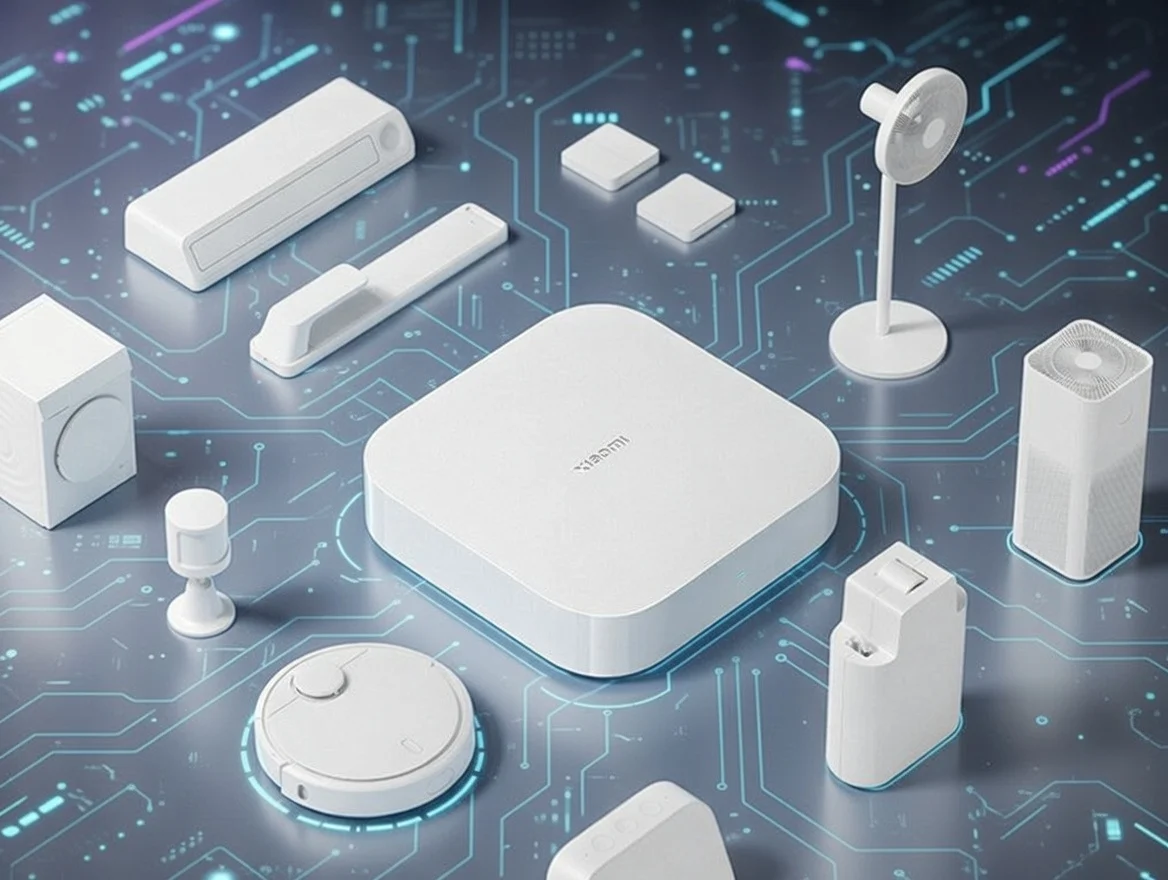
- The Hub or Gateway: This is the brain of your Zigbee network. It connects all your Zigbee devices to your home’s Wi-Fi network and, crucially, to your smartphone. Popular options include the Xiaomi Gateway 3 (ZNDMWG03LM), the Xiaomi Multimode Gateway 2, or even Aqara Hubs like the M2, M3, or E1 (many users swear by Aqara hubs for their versatility with both Xiaomi/Mijia and other brands). For the super tech-savvy, there are third-party hubs like Sonoff, ConBee, or a USB dongle combined with Home Assistant and Zigbee2MQTT.
- End Devices: These are your battery-powered sensors. They’re typically “sleepy” devices, waking up only to send data when something happens (like detecting motion or a door opening). This is why their batteries last so long!
- Router Devices: These are usually mains-powered devices like smart plugs, light bulbs, or wired wall switches. They don’t just act as smart gadgets; they also actively repeat Zigbee signals, strengthening and extending your mesh network.
Once you’ve paired your devices to your hub (which is usually a super simple process through the Mi Home app), the real fun begins. You can start crafting “scenes” or “automations.” For example: “If motion is detected in the hallway at 10 PM, turn on the hallway light to 30% brightness and send me a notification.” It’s like having a helpful assistant for your entire home! You can even enhance your smart home with comprehensive HyperOS 3.0.300 Beta: Xiaomi Bridges the Gap with Apple Ecosystem integrations and benefit from the latest improvements in HyperOS 3.1: Xiaomi’s Leap Towards Faster, Smarter Devices.
Your Ultimate Guide to Xiaomi/Mijia Zigbee Devices
Ready to dive into the amazing world of Mijia Zigbee gadgets? Here’s a comprehensive, up-to-date list of the most popular and common Xiaomi/Mijia devices (and some classic Aqara ones that share the same ecosystem) that use Zigbee. I’ve included common model codes to help you find them easily on sites like AliExpress, Amazon, or Xiaomi’s official stores.

smart devices
Motion and Presence Sensors
These little eyes are fantastic for triggering lights, alarms, or notifications.
* Xiaomi Mi Motion Sensor (RTCGQ11LM): The iconic round sensor, known for its reliability.
* Xiaomi Mi Human Body Sensor (older version): An earlier iteration of the motion sensor.
* Aqara Motion Sensor (RTCGQ11LM / RTCGQ12LM): The square version, often with improved features.
* Aqara Presence Sensor FP2: High-precision mmWave technology for detecting even subtle presence, not just motion.
Door/Window Sensors (Magnetic Contact)
Essential for security and automation – know instantly if something’s open or closed.
* Xiaomi Door/Window Sensor (MCCGQ11LM): The classic, simple contact sensor.
* Aqara Door and Window Sensor (MCCGQ11LM / MCCGQ12LM): Also reliable and widely available.
* Aqara Door and Window Sensor P2: Newer version with enhanced features.
Temperature and Humidity Sensors
Keep an eye on your indoor climate to optimize heating/cooling or just monitor comfort.
* Xiaomi Temperature and Humidity Sensor (WSDCGQ11LM): Small, accurate, and long-lasting.
* Aqara Temperature and Humidity Sensor (WSDCGQ11LM / TH-S02): Very similar performance and reliability.
Flood/Water Leak Sensors
Get immediate alerts if a leak occurs, potentially saving you from costly damage.
* Xiaomi Aqara Water Leak Sensor (SJCGQ11LM): Reliable for detecting moisture.
* Aqara Water Leak Sensor T1: An updated version.
Wireless Switches and Buttons
Control lights, scenes, or devices with a simple press, double-press, or long-press.
* Xiaomi Wireless Switch (WXKG01LM / WXKG11LM): Simple single or double-button options.
* Aqara Wireless Mini Switch (WXKG12LM): Compact and versatile.
* Aqara Cube Controller (MFKZQ01LM): The famous cube that allows control via gestures (shake, flip, rotate!).
* Aqara Opple Switches: Available in various configurations (2, 4, 6 buttons) for multi-scene control.
Smart Plugs
Turn any “dumb” appliance into a smart one, often with energy monitoring. These also act as Zigbee routers!
* Aqara Smart Plug (SP-EUC01 / SP-EUK01): Popular for its energy monitoring capabilities.
* Xiaomi Smart Plug Zigbee (ZNCZ05CM): A straightforward smart plug.
Wall Switches (No Neutral Wire)
Replace your existing light switches with smart ones, even in older homes without a neutral wire (a common challenge).
* Aqara Wall Switch (No Neutral): Models like H1, H2, designed for European wiring.
* Xiaomi Aqara Single/Double Switch: Similar functionality for various regions.
Curtains and Blinds
Automate your window coverings to open/close based on time, light levels, or other sensors.
* Aqara Roller Shade Driver E1: Motorizes existing roller blinds.
* Aqara Curtain Motor (Zigbee): For full smart curtain systems.
Light Bulbs and LED Strips
While many Xiaomi smart lights use Wi-Fi or Bluetooth, some, like the Aqara LED Bulb (Zigbee), integrate perfectly into your Zigbee network. Remember, other popular Zigbee brands like Philips Hue and IKEA Tradfri can also join the same network!
Other Noteworthy Devices
Beyond the basics, the Xiaomi Mijia Zigbee Ecosystem offers even more specialized gadgets:
* Aqara Vibration Sensor (DJT11LM): Detects vibrations – great for windows, drawers, or even artworks.
* Aqara Smoke Detector: Crucial for safety, providing early warnings.
* Aqara Gas Leak Detector: For natural gas safety in your home.
* Xiaomi Gas Leak Sensor (natural gas): Xiaomi’s own version.
* Aqara Smart Lock U100: A smart door lock with fingerprint recognition and Zigbee connectivity.
* And don’t forget the handy Xiaomi Tag tracker, a neat addition to your broader Xiaomi gadget collection!
This list isn’t entirely exhaustive – there are easily over 50 compatible models out there, especially if you’re venturing into advanced setups like Zigbee2MQTT or ZHA with Home Assistant. But these cover the vast majority of what people are buying in 2026. Keep an eye out for models ending in “LM” (often older, but highly compatible) and newer versions like “T1,” “E1,” or “P1,” which typically feature Zigbee 3.0 and boast improvements in range, battery life, or new functionalities.
Conclusion: Where to Start with Zigbee and Xiaomi?
So, has the Xiaomi Mijia Zigbee Ecosystem caught your eye? If you’re new to the smart home world, here’s my simple advice:
- Grab a Hub: Start with a reliable brain like the Xiaomi Gateway 3 or an Aqara Hub M2/M3 (the Aqara hubs often offer better cross-brand compatibility).
- Start Small: Pick up 3-4 essential sensors: a motion sensor, a door/window sensor, and a temperature/humidity sensor are perfect for beginners.
- Get App-y: Download the Mi Home (or Aqara Home) app and have a blast setting up some basic automations.
- Level Up (Optional): If you crave more power, local automations, and cloud-free control, consider a Home Assistant setup with Zigbee2MQTT.
Xiaomi and Mijia products stand out for their incredible value, solid reliability, and a massive, supportive community. In 2026, they remain one of the top recommendations for anyone looking to build a robust smart home system without breaking the bank. Are you ready to dive in and create your first Zigbee-powered smart home? With Xiaomi, the only limit is your imagination… and maybe how many spare batteries you have on hand!