Redmi K100 “Athens” Leaks: Next-Gen Flagship Killer Specs Revealed
Redmi K100 “Athens” leaks. # Redmi K100 “Athens”: What We Know So Far and What to Expect from the Next Flagship Killer Generation
The Redmi K series has always been synonymous with brutal performance at prices that challenge traditional flagships. With the Redmi K80 and K90 still fresh on the market (launched in 2024 and 2025 respectively), leaks are already hinting at the next iteration: the Redmi K100 series. The base model carries the codename “Athens,” and its model number is Q11. This isn’t just speculation; it comes from an exclusive leak published on January 17, 2026, on XiaomiTime, a site specializing in Xiaomi leaks with a proven track record for accuracy in codenames and model numbers.
In this article, we’ve compiled all the available information as of January 18, 2026, analyzed the variants (including the K100 Pro Max “Songyuan”), compared them with previous generations, and explained why this series might be Redmi’s most ambitious yet. All based on credible sources like XiaomiTime, leaks from internal databases, and the brand’s historical patterns.
Origin of the Rumors: Where Do These Leaks Come From?
The first solid clues about the Redmi K100 series emerged in mid-January 2026. The website XiaomiTime reported that two devices were detected in Xiaomi’s development database:
- Redmi K100 → codename “Athens”, model Q11.
- Redmi K100 Pro Max → codename “Songyuan”, model Q11X.
These codenames aren’t made up; they follow Xiaomi’s pattern of using names of Chinese cities or regions (Songyuan is a city in Jilin, China). The change in the model suffix (Q11X instead of the typical “U” for Pro/Ultra) suggests an evolution in internal naming conventions.
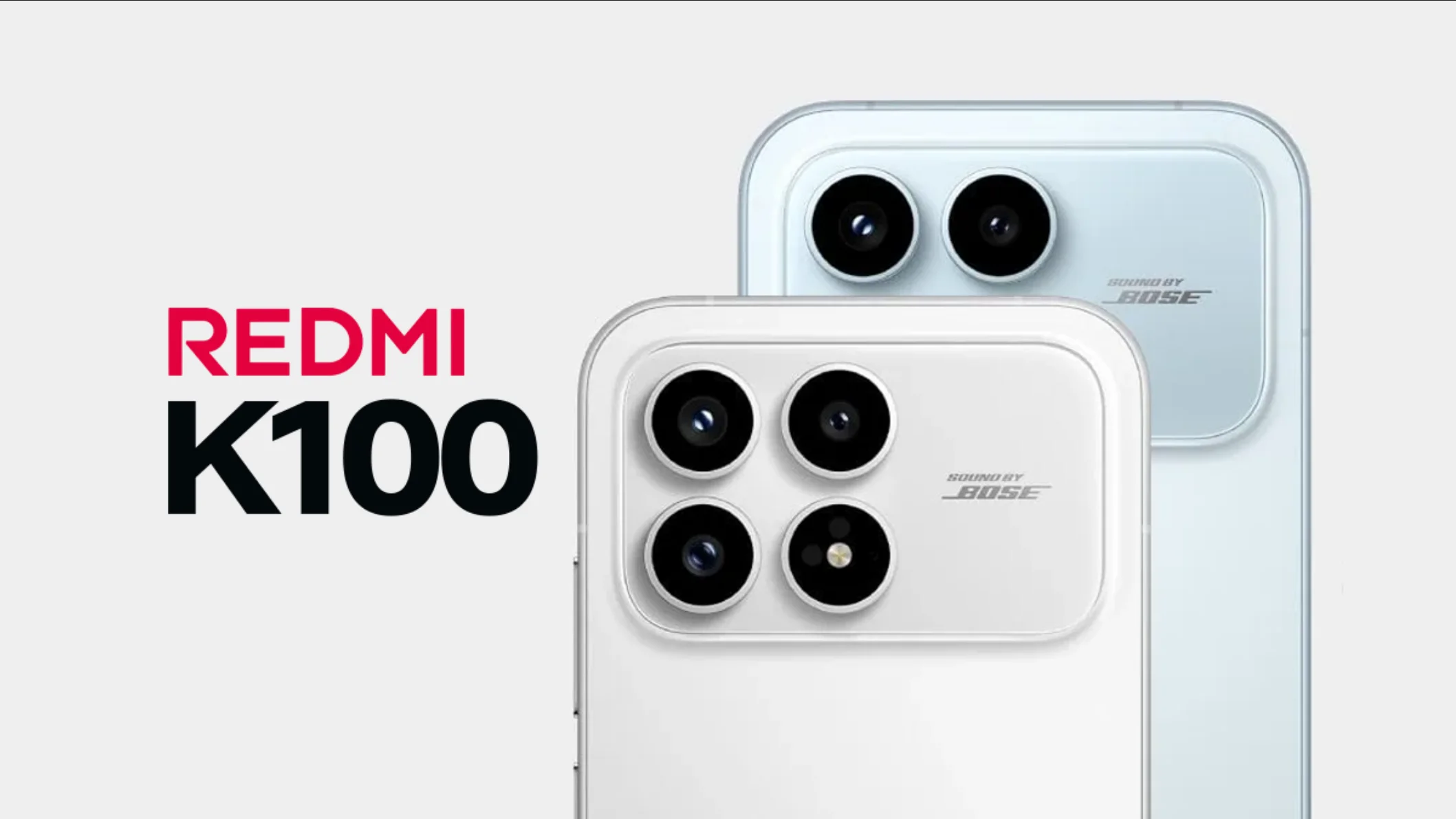
Other sources like TugaTech, MIUI Polska, and Chinese forums (Weibo, Digital Chat Station) replicated the information within hours, confirming that both models will use Qualcomm’s latest-generation processors. Globally, the base K100 is expected to become the POCO F9 Pro, and the Pro Max will become the POCO F9 Ultra, continuing the tradition of rebranding for international markets.
There’s no official announcement from Xiaomi yet, but the timing is right: the K series typically debuts in China late in the year or in Q1 of the following year, with global/POCO versions arriving months later.
Expected Variants: K100 Base vs. K100 Pro Max
So far, leaks point to two main models (possibly three if there’s a separate Ultra):
Redmi K100 (“Athens” / Q11) — The Accessible Model
This will be the more budget-friendly option in the series, still packing a serious punch.
- Processor: Qualcomm Snapdragon 8 Gen 4 (or direct successor to the 8 Elite). This promises a significant leap in raw power, crucial for smooth gaming and demanding applications.
- Display: Around 6.67-6.68″ Super AMOLED with FHD+ or 2K resolution and a buttery-smooth 120-144Hz refresh rate. Expect vibrant colors and fluid visuals.
- RAM/Storage: Options likely starting at 12GB RAM paired with 256GB of storage, scaling up to 16GB RAM and 512GB. Plenty of space for your apps, photos, and videos.
- Battery: A hefty 5000-6000 mAh capacity, paired with fast charging (likely 120W+). We’re talking about getting hours of use from just a few minutes of charging.
- Camera: A triple rear camera setup, potentially featuring a 108MP main sensor, and a ~20MP front-facing camera for your selfies.
- Estimated Price: $500-600 USD (~€460-550 EUR, or equivalent in local currency based on exchange rates).
Redmi K100 Pro Max (“Songyuan” / Q11X) — The Top-Tier Version
This is where Redmi pushes the boundaries, aiming to rival the absolute best in the market.
- Processor: The next-gen Qualcomm flagship processor (perhaps Snapdragon 8 Elite 2 or equivalent). This will undoubtedly be the most powerful chip available, delivering unparalleled performance.
- Display: A large ~6.9″ LTPO AMOLED display with a high resolution (1200×2608 or 2K+) and a 120Hz refresh rate. LTPO technology allows for adaptive refresh rates, saving battery life without sacrificing smoothness.
- RAM/Storage: Expect configurations of 12GB or 16GB RAM, with storage going all the way up to 1TB. For those who need maximum space and multitasking capabilities.
- Battery: Rumors suggest a massive battery, possibly up to 7560 mAh. This is akin to Redmi’s ultra-battery focused devices and would offer incredible longevity, perfect for marathon gaming sessions.
- Camera: This is where we might see a significant upgrade. Leaks mention 200MP sensors (like the Samsung ISOCELL HP5 1/1.56″ or HPE 1/1.4″), and crucially, a periscope telephoto lens – a first for the K series! This hints at a serious focus on zoom photography. The balance between sensor size and high pixel counts is key here.
- Other Features: Enhanced audio, a high IP rating for water and dust resistance, and advanced cooling systems for peak gaming performance are also possibilities.
- Estimated Price: $600-800+ USD (~€550-730 EUR).
While some older leaks mentioned MediaTek’s Dimensity processors, the most recent and credible ones from XiaomiTime confirm Qualcomm for both models.
Comparing with Previous Generations: What’s Evolving?
The K series has consistently delivered “flagship killer” performance with annual improvements. Let’s see how the K100 series stacks up:
- Redmi K70 (2023-2024): Featured Snapdragon 8 Gen 3 (Pro), a ~5000 mAh battery, 120W charging, and a 50MP triple camera. Priced around $400-600.
- Redmi K80 (2024): Introduced the Snapdragon 8 Elite, saw display improvements with LTPO, similar or larger battery, and better cooling.
- Redmi K90 (2025): Likely packed Snapdragon 8 Elite Gen 2 or similar, brought a periscope camera to the Pro Max, featured Bose 2.1 audio with a subwoofer, and a large battery. Priced around $500-800.
Redmi K100 vs. its Predecessors:
- Processor: A jump to Snapdragon 8 Gen 4/Elite 2 promises a 20-30% performance boost over the K90/K80. This means even faster app loading, smoother gameplay, and quicker multitasking.
- Battery: The Pro Max could hit a staggering 7560 mAh, a significant upgrade from the ~5000-6000 mAh found in previous models. This is a game-changer for users who rely heavily on their phones throughout the day without constant charging.
- Camera: A potential leap from 50-108MP to 200MP with a periscope lens shows Redmi’s ambition to compete seriously in the high-end photography space without drastically increasing prices. This move challenges established camera giants.
- Display: While retaining high refresh rate AMOLED panels, the Pro Max is expected to feature more power-efficient LTPO technology.
- Price/Value: The K100 series is poised to maintain the K series’ signature value proposition: flagship-level performance for around $500-700, significantly undercutting the spec-per-dollar cost of premium offerings from Samsung or Apple.
The evolution is clear: more raw power, massive battery capacities, and cameras that are moving from “good enough” to genuinely competitive in the high-end segment. For those interested in the broader Xiaomi ecosystem, check out our thoughts on the Xiaomi 17 Pro Magic Screen and its HyperOS 3 integration.
What to Expect in 2026? Launch, Availability, and Why the Hype?
Probable Launch: Late 2025 or Q1 2026 (December 2025 – March 2026) in China first, followed by global/POCO releases a few months later. Pricing in regions like Latin America and Argentina will depend on import duties and local market dynamics, but expect base models to hover around the $500-800 mark.
If these leaks hold true, the Redmi K100 series could very well be the king of performance-per-dollar in 2026. We’re looking at seamless gaming experiences without throttling, batteries that last for days, competent cameras that rival pricier phones, and HyperOS packed with advanced AI features. It’s a recipe for another incredibly popular release from the Redmi camp.
For those curious about other upcoming Xiaomi innovations, keep an eye on our Tech News section, especially regarding potential future releases like the Xiaomi 17 Ultra Leica.
Source







3 thoughts on “Redmi K100 “Athens” Leaks: Next-Gen Flagship Killer Specs Revealed”