POCO X8 Pro Max: The $450 “Anti-Flagship” Exposing $1,200 Phones
For more than a decade, the smartphone industry has sold us a simple story. If you want the best technology, you have to pay over a thousand dollars for it. Traditional flagships have justified their sky-high prices with dazzling screens, rugged builds, long-lasting batteries, and cutting-edge fingerprint sensors.
The POCO X8 Pro Max is here to break that narrative. In fact, it exposes an uncomfortable truth. A big chunk of what you pay for a $1,200 flagship isn’t hardware cost. It’s brand margin and marketing budget.
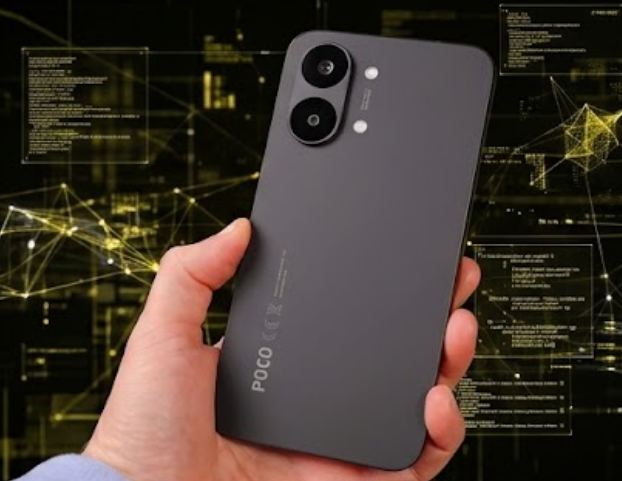
Look closely at the X8 Pro Max’s real-world specs and hardware behavior, and a clear pattern emerges. Xiaomi has built a phone that beats traditional flagships in several critical engineering categories. In short, real consumer innovation no longer lives exclusively in the most expensive phones on the market.
Quick Verdict: Who Is This Phone For?
- For Battery-Life Obsessives: Yes. Nothing near this price gets close to an 8,500 mAh battery with 100W charging.
- For Camera-First Buyers: Look elsewhere. However, photography is this phone’s clear weak point.
- For Everyday Users: Overall, one of the smartest value picks of 2026, with flagship-level durability and speed at a fraction of the price.
1. Silicon-Carbon Battery: The Real Innovation Flagships Still Don’t Have
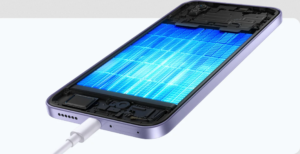
While $1,200 flagships remain stuck around 5,000 mAh, blaming chassis thickness or weight, the POCO X8 Pro Max takes a different approach. It packs a silicon-carbon battery with a massive 8,500 mAh capacity, and a 9,000 mAh variant is even sold in some markets, like India.
What’s genuinely disruptive here isn’t just the number, it’s the packaging engineering. Silicon-carbon’s higher energy density lets Xiaomi fit that much capacity into a body that’s just 8.2 mm thick and 218 grams.
In daily use, this translates into:
- Real two-day battery life: heavy 5G use, GPS navigation, max brightness, and gaming without hunting for an outlet by the end of the day.
- 100W charging speed: with the included charger, POCO says the phone reaches roughly half charge in about 25 minutes, and a full charge in under an hour. That’s a real feat, especially compared to flagships that charge slower and, in many cases, don’t even include a charger in the box.
- 27W reverse wired charging: the phone can work as a fast power bank for earbuds, watches, or even other phones.
2. Display & Durability: Flagship Specs Without the Markup
Mid-range phones used to cut corners hard on the screen or the build quality. The X8 Pro Max shows how much that gap has closed.
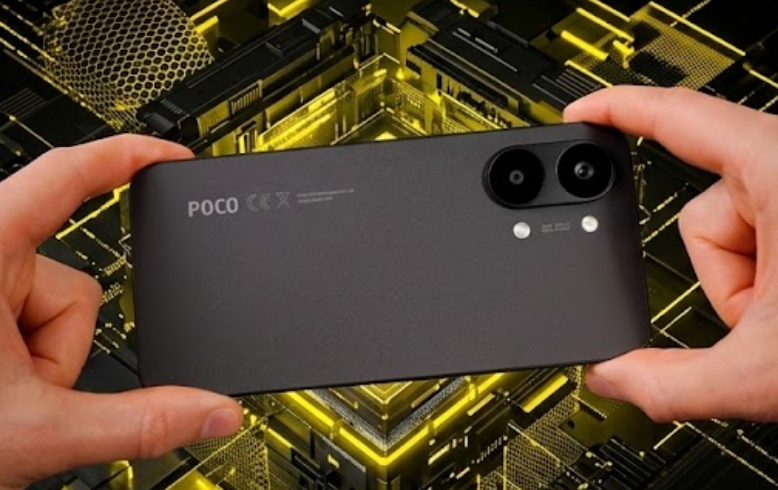
- 6.83-inch AMOLED panel: 120Hz refresh rate, high-frequency PWM dimming (3,840Hz) to reduce eye strain, plus native HDR10+ and Dolby Vision support.
- Extreme brightness: up to 2,000 nits in high-brightness mode and peaks of 3,500 nits, for clean readability in direct sunlight.
- Industrial-grade toughness: on top of the usual IP68 rating, the X8 Pro Max adds IP69K certification, meaning it can withstand high-pressure, high-temperature water jets, not just splashes.
- Gorilla Glass 7i on the front for added drop and scratch resistance.
Paying $1,200 for a great screen or serious water resistance is a much harder sell when a value-focused phone offers essentially the same protection.
3. Biometrics & Connectivity: No Corners Cut Where It Matters
Mid-rangers often save money with slow optical fingerprint readers or by skipping the latest connectivity standards. The X8 Pro Max doesn’t play that game.
Instead of a budget optical sensor, it uses an in-display ultrasonic fingerprint reader. As a result, unlocking is faster and more secure, and it stays reliable even with wet or dirty fingers, a feature that until recently was reserved for true flagships.
The connectivity sheet is future-proofed too: Wi-Fi 7, Bluetooth (5.4 or 6.0 depending on region), NFC, a firm haptic motor, and, still handy, an infrared blaster.
4. Raw Performance: The MediaTek Dimensity 9500s
On the processing side, the MediaTek Dimensity 9500s takes charge. Paired with up to 12GB of RAM and fast UFS 4.1 storage, it delivers a smooth day-to-day experience.
Today’s high-end chipsets have hit a performance ceiling where daily-use differences are barely noticeable. Indeed, the X8 Pro Max runs demanding games and heavy multitasking without drama. That said, independent reviews have noted the chip can throttle under sustained, heavy gaming loads, occasionally causing dropped frames. Ultimately, paying a brand tax for a chip that scores a bit higher on a synthetic benchmark, while running hotter, doesn’t make much sense for most real-world users.

The Trade-Off: Where POCO Actually Cut Costs
To understand why this phone doesn’t cost $1,200, look at where Xiaomi chose to save. After all, most people mainly use their phone camera for casual photos, social media, and scanning documents, while caring enormously about battery, screen, and smoothness. That’s where the compromises show up:
- Camera is the weak point. The 50MP OIS main sensor performs well in good light, but it applies aggressive AI processing when you zoom in. Meanwhile, the 8MP ultrawide shows visible noise in low light, and the 20MP selfie camera struggles with sharpness and portrait-mode cropping.
- Video isn’t flawless either: some hands-on reviews note the chipset can throttle and drop frames under sustained load.
- Standby power draw: the 8,500 mAh battery needs some software optimization to avoid background drain if the phone sits unused for several days.
Final Verdict: The Democratization of the Flagship Experience
The POCO X8 Pro Max doesn’t try to be the best phone in the world at everything, and that’s exactly its strength. It’s a reality check for the smartphone industry.
It proves that features once used to justify sky-high prices can now be delivered at a fraction of the cost. Think advanced battery tech, ultrasonic fingerprint readers, IP69K certification, 3,500-nit screens, and UFS 4.1 storage.
If pro-level camera work and cinema-grade video aren’t your top priority, paying $1,200 for a smartphone in 2026 is no longer a technical necessity. It’s simply a splurge. All things considered, the POCO X8 Pro Max is shaping up to be one of the smartest value picks of the year.
Frequently Asked Questions (FAQ)
Q: Does the POCO X8 Pro Max really have an 8,500 mAh battery?
A: Yes, confirmed by Xiaomi/POCO’s official spec sheet. A 9,000 mAh variant is sold in some markets, including India.
Q: Is the camera bad on the POCO X8 Pro Max?
A: Not bad, but it’s the phone’s weakest area compared to true flagships. Main shots are solid; ultrawide and selfie quality lag behind.
Q: Does it support fast charging?
A: Yes, 100W wired charging, plus 27W reverse wired charging.
Q: Is the POCO X8 Pro Max water resistant?
A: Yes, it carries IP68/IP69K ratings, tested against high-pressure water jets and short immersion.
Disclaimer: Prices and availability vary by region and change over time. Figures above reflect Xiaomi/POCO’s official specifications and independent reviews available at the time of writing.