Xiaomi MiMo-V2.5: Pricing and Benchmark Comparison vs Other AI Models
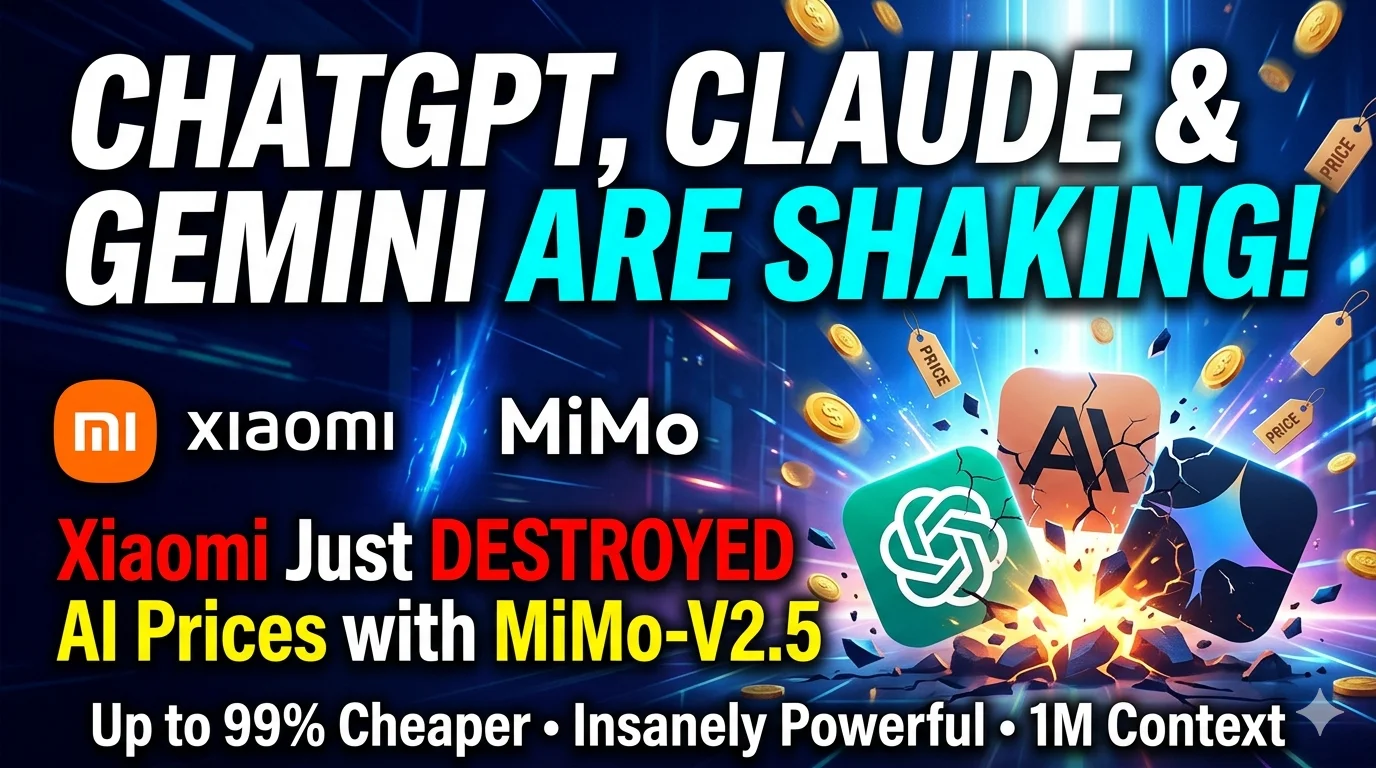
Xiaomi has permanently cut API pricing for its MiMo-V2.5 model series by up to 99%, one of the steepest reductions seen in the ongoing AI pricing race between Chinese and Western model providers. The change took effect on May 27, 2026, and applies automatically to all existing MiMo API keys and Token Plans — no action is required from current users.
What Changed
Xiaomi’s announcement covers two models: the standard MiMo-V2.5 and the higher-end MiMo-V2.5-Pro. The company also simplified its billing structure, removing the old pricing tiers that charged more as context length increased. Pricing is now flat regardless of how much of the 1-million-token context window is used.
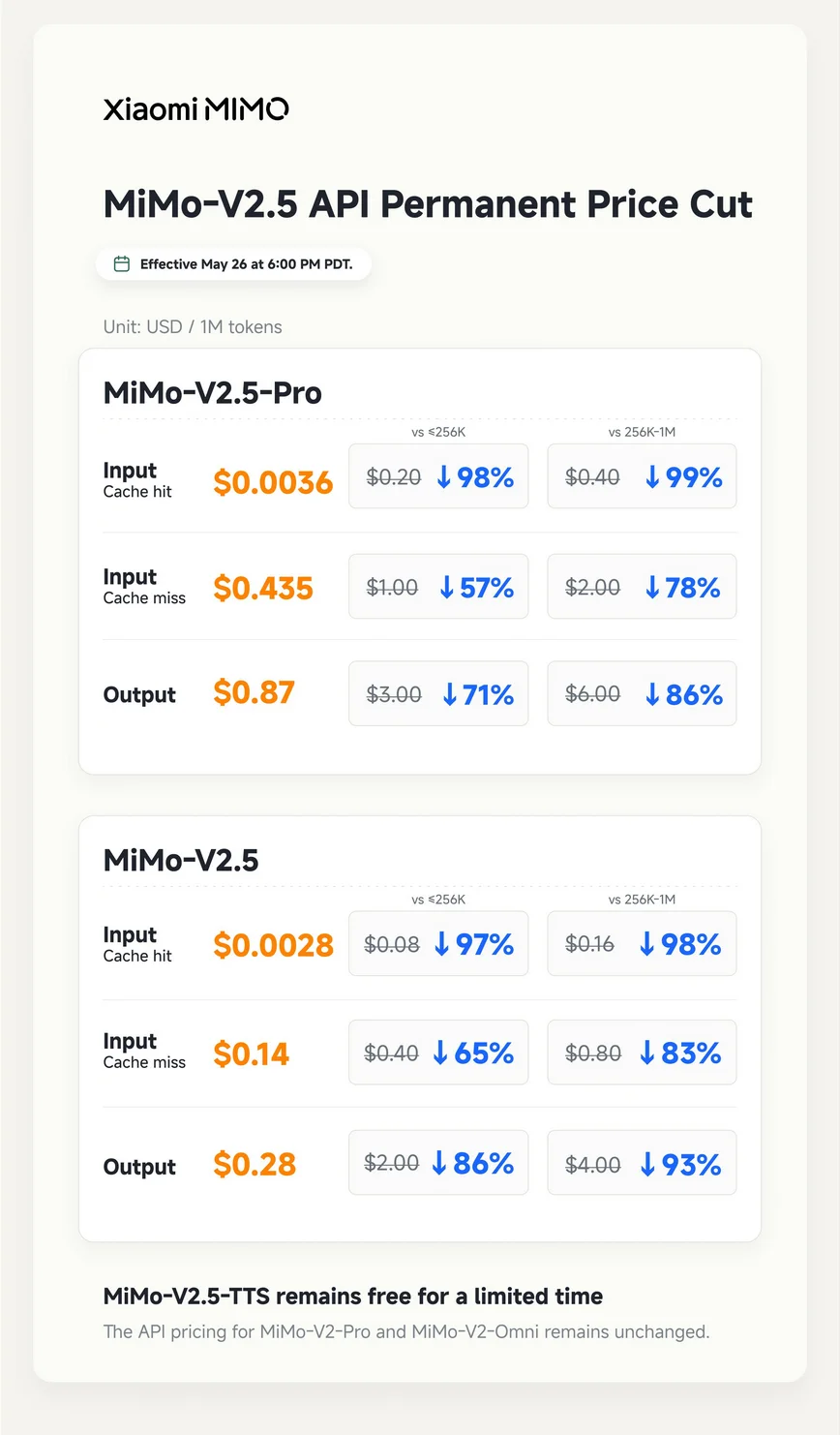
The steepest cuts apply to cached input tokens, where costs dropped by as much as 99%. Standard input and output pricing was also reduced, though by a smaller margin (roughly 57–71%, depending on the tier).
Current MiMo-V2.5 Pricing
| Model | Input (per 1M tokens) | Output (per 1M tokens) | Cached input (per 1M tokens) | Context window |
|---|---|---|---|---|
| MiMo-V2.5 | ~$0.14 | ~$0.28 | ~$0.0028 | 1,000,000 tokens |
| MiMo-V2.5-Pro | ~$0.30–$0.43 | ~$0.61–$0.87 | ~$0.0036 | 1,000,000 tokens |
Prices vary slightly by provider (Xiaomi’s own API, OpenRouter, and several third-party hosts all list MiMo-V2.5). For comparison, independent trackers such as Artificial Analysis and OpenRouter put current list prices for frontier models from OpenAI, Anthropic, and Google well above MiMo-V2.5’s rates — in some cases by an order of magnitude or more, particularly on cached input pricing. Exact competitor pricing changes frequently, so we’re not listing specific dollar figures for other vendors here; check each provider’s official pricing page for current rates before making a cost comparison.
Why Xiaomi Can Offer This Price
Xiaomi attributes the reduction to inference efficiency work rather than a promotional discount subsidized at a loss. The company points to two specific optimizations:
- SGLang HiCache with sliding-window attention, which reduces how much data moves between GPU memory, CPU memory, and storage during inference.
- FP4 quantization and parallel decoding (DFlash), aimed at increasing throughput per GPU.
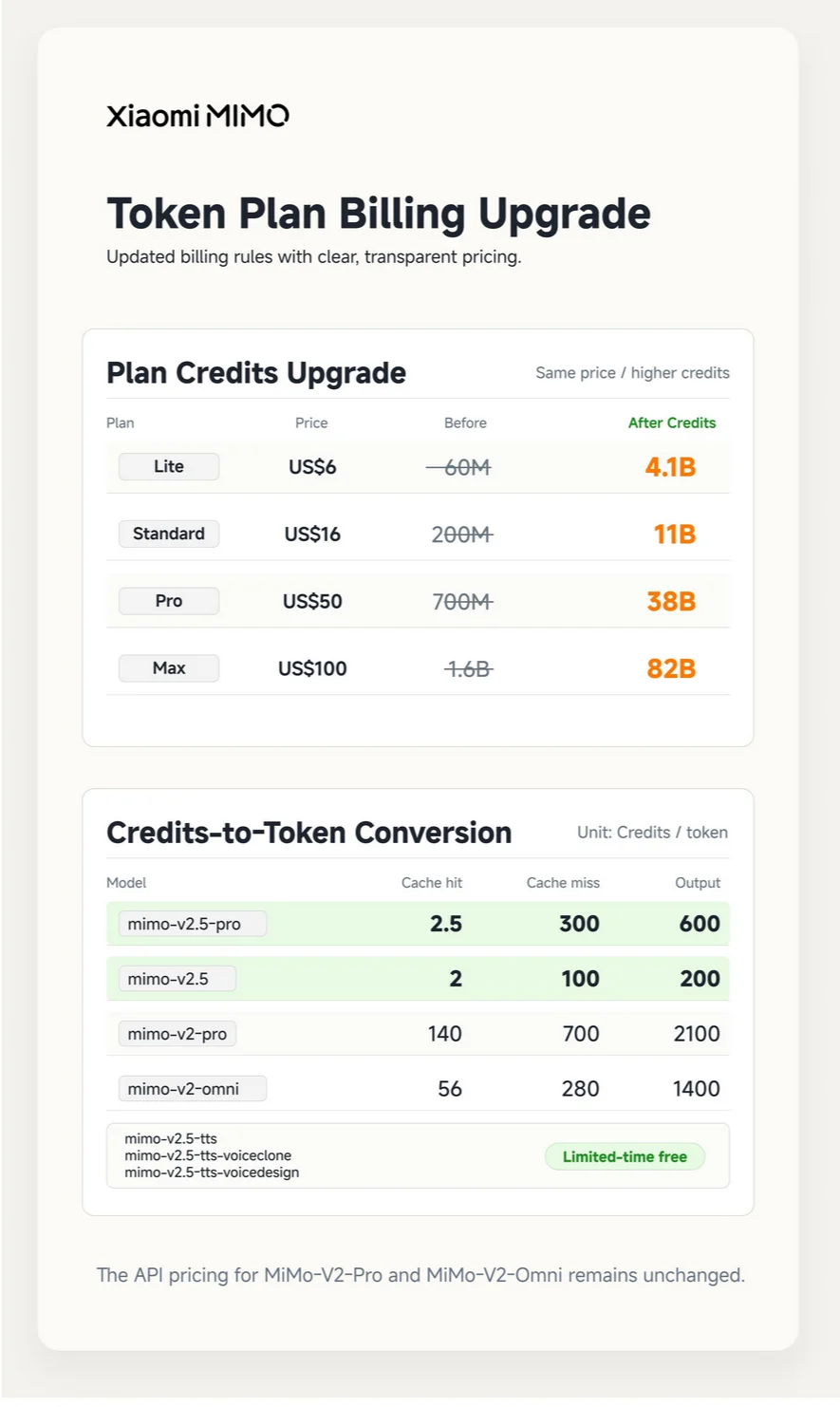
Xiaomi has also reset Token Plan credit balances for existing users and increased the token allowance per plan by roughly 5–8x.
How MiMo-V2.5 Performs
MiMo-V2.5 is a sparse mixture-of-experts model (310B total parameters, ~15B active per token) trained on 48 trillion tokens, according to Xiaomi’s technical documentation. It’s natively multimodal, handling text, image, video, and audio input.
On Claw-Eval, a benchmark Xiaomi uses to measure everyday agentic tasks, MiMo-V2.5 scores 62.3 on the general subset — which the company describes as placing it near the performance-to-efficiency frontier for open-weight models. MiMo-V2.5-Pro is positioned by Xiaomi as approaching the performance of Claude Opus 4.6 on demanding agentic workloads, though this is Xiaomi’s own characterization rather than an independent third-party benchmark result, and other providers may report different comparative results depending on the test suite used.
The practical takeaway: MiMo-V2.5 is competitive with several well-known closed models on general agentic and coding benchmarks, at a meaningfully lower price per token. It is not the top performer across every benchmark, but the price-to-performance ratio is unusually strong for an open-weight model.
What This Means for Developers
For anyone building on top of LLM APIs, the price cut matters most in high-volume, long-context use cases: coding agents that repeatedly re-read a codebase, document-analysis pipelines, or customer-support bots handling large knowledge bases. In those scenarios, the cost difference compounds quickly, and MiMo-V2.5’s flat, tier-free pricing makes budgeting simpler.
MiMo-V2.5 supports OpenAI- and Anthropic-compatible API endpoints, so it can be swapped into existing tools like Claude Code or OpenCode with a configuration change rather than a rewrite.
Where to Try It
- Developers: platform.xiaomimimo.com for API keys and documentation
- General users: mimo.xiaomi.com for the chat interface
Source: Xiaomi’s official MiMo pricing announcement, mimo.xiaomi.com, and Xiaomi’s MiMo model page.
This article was updated to reflect Xiaomi’s official pricing as of the most recent published rates. AI model pricing changes frequently — always confirm current rates on the provider’s official page before making purchasing decisions.