Xiaomi Robotics Open Source: Your Gateway to Building Smart
Xiaomi robotics open source. # Can You Build a Robot at Home with a Xiaomi Brain? The Truth Behind the New Open Source Revolutionizing Robotics
Imagine for a moment you could download the intelligence of an advanced robot, install it on your own hardware, and teach it to brew coffee, tidy your desk, or even assist with complex household chores. Sounds like something out of a sci-fi movie, right? Well, stop imagining: Xiaomi just made it possible. In a move that has sent ripples across the global tech community, the Chinese giant has open-sourced its foundational robotics model, Xiaomi-Robotics-1. This isn’t just a software update; it’s the free release of over 100,000 hours of real-world robotic experience to anyone with an internet connection. But before you rush to buy servo motors and envision building your own mechanical assistant this weekend, you need to understand what this launch truly means for building a robot at home.
Is this the definitive moment for home “DIY robotics”? Or are we looking at a professional tool disguised as a toy? In this article, we’ll break down, without unnecessary jargon, what this “digital brain” exactly is, what you can actually do with it, and why Xiaomi’s decision could forever change how we interact with machines in our homes. Get ready, because the answer is far more fascinating (and nuanced) than a simple headline.
The Unleashed ‘Brain’: What Exactly is Xiaomi-Robotics-1?

To grasp the magnitude of this announcement, we first need to shed the traditional idea of a “robot.” When we think of robots, we often visualize the hardware: metallic arms, wheels, laser sensors. But the true value of a modern robot isn’t in its joints; it’s in its foundational model.
Think of Xiaomi-Robotics-1 as the robotic equivalent of what ChatGPT was for text. Just as a language model learned to write by reading trillions of words, this model has learned to manipulate physical objects by processing an overwhelming amount of sensory and motor data. It’s not a program that follows predefined instructions (“if see cup, grasp”); it’s a neural network that has developed an intuitive understanding of physics, weight, friction, and the three-dimensional geometry of the real world.
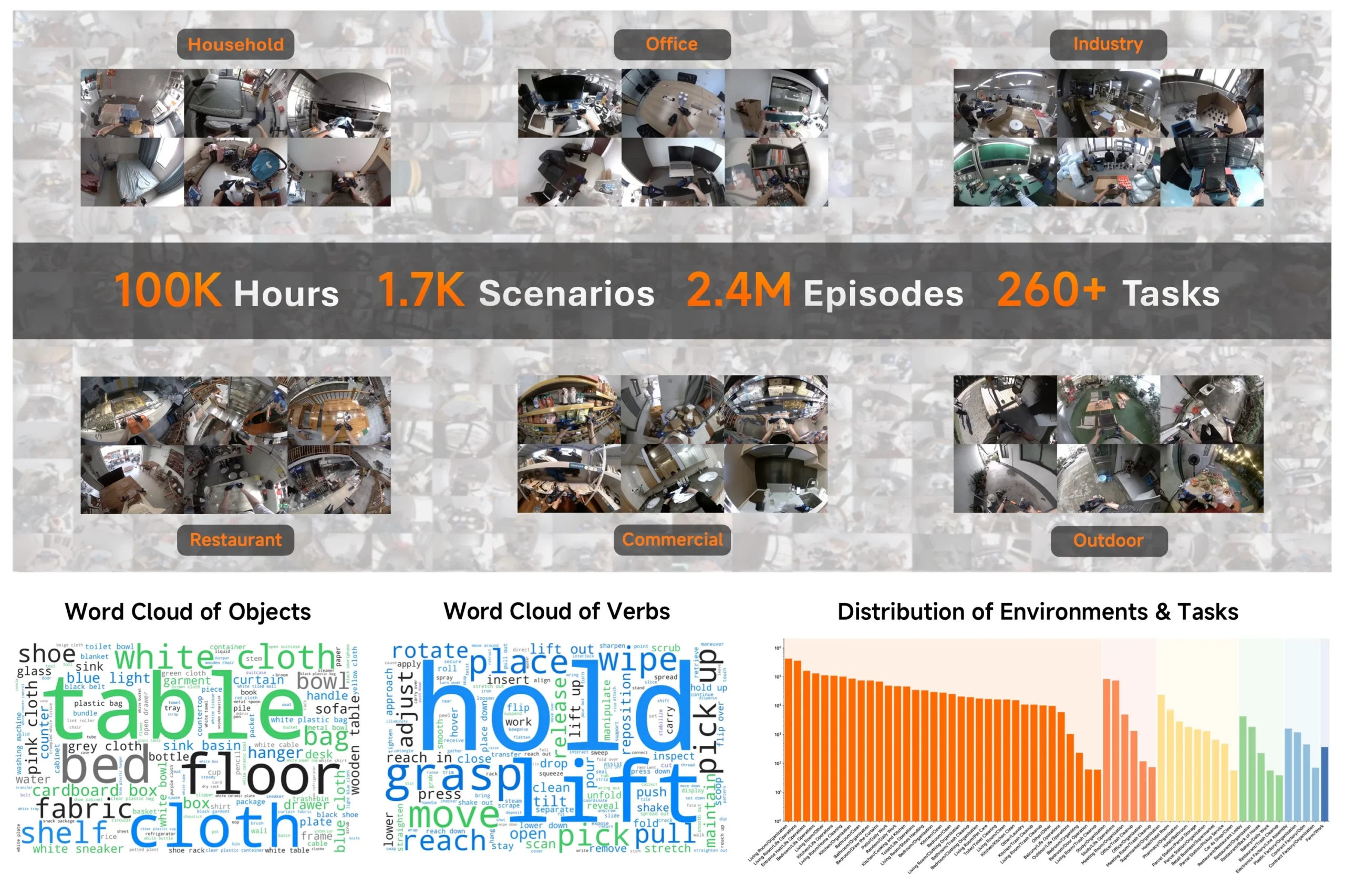
What makes this release unique is the sheer scale of real-world data. Many robotic models are trained in virtual simulators, which creates a huge gap when they try to operate in reality (a problem known as the “sim-to-real gap”). Xiaomi has overcome this by injecting the model with +100,000 hours of real physical interactions during its pre-training. This means the model already knows, from empirical experience, how a slippery glass feels, how much force to apply to avoid breaking an egg, or how to regain balance if something goes wrong.
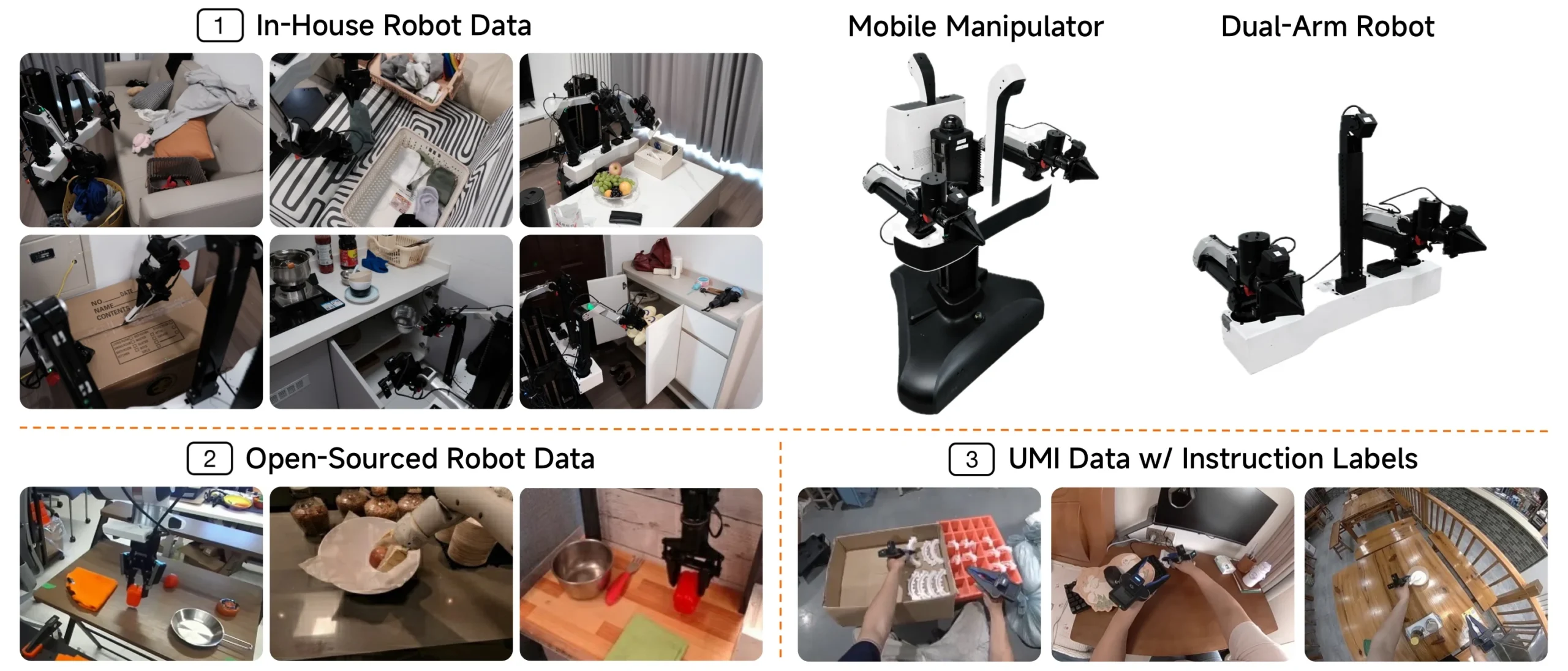
Furthermore, the +10,000 hours of cross-embodiment post-training are key to its versatility. This technical term means the brain isn’t tied to a single robotic body. It has been refined with data from multiple morphologies: 6-axis arms, anthropomorphic hands, mobile platforms, and even experimental configurations. In plain language: it’s a flexible brain capable of adapting to different “bodies,” not just Xiaomi’s proprietary robots like CyberDog or CyberOne. This comprehensive approach to building a robot at home through software is truly groundbreaking.
Here’s a quick look at the core aspects of Xiaomi-Robotics-1:
| Feature | Description |
|---|---|
| Model Type | Foundational Robotics Model |
| Pre-training Data | +100,000 hours of real physical interactions |
| Post-training Data | +10,000 hours of cross-embodiment data |
| Capabilities | Intuitive understanding of physics, object manipulation, real-world dynamics |
| Accessibility | Open source (GitHub, Hugging Face) |
The Promise of DIY Robotics: Separating Reality from Fiction
Here’s where we need to be honest with you, our enthusiastic reader. The term “DIY” (Do It Yourself) carries a wonderful connotation of accessibility and home-based creativity. And yes, you can technically download this model for free from GitHub or Hugging Face. But can you really build a functional robot in your garage this weekend?
The short answer is: probably not. And that’s not a bad thing; it’s simply the reality of cutting-edge technology.
Implementing a foundational model of this magnitude requires significant computational resources. To run inference (i.e., for the robot to “think” and act in real-time), you’ll need powerful GPUs, likely professional-grade or cloud servers. Additionally, compatible robotic hardware isn’t something you pick up at the local hardware store: we’re talking about precision actuators, torque controllers, depth cameras, and haptic feedback systems that can cost thousands of dollars.
So, does this mean the release is useless for the general public? Absolutely not. It means DIY robotics has evolved. It’s no longer about soldering wires and programming basic microcontrollers; it’s about AI integration, specialized fine-tuning, and adaptation of foundational models. The new robotic “maker” is someone who understands how to take this open source brain and adapt it to a specific use case, even if the underlying hardware is acquired commercially. For those interested in the latest tech developments, this shift is monumental. The barrier to entry for advanced robotic intelligence has dramatically fallen, opening doors for students, startups, and independent developer communities worldwide. This, inevitably, will filter down to consumer products faster than you might expect.
Why Xiaomi Did This: Beyond Tech Philanthropy
Let’s be clear: Xiaomi isn’t a non-profit organization. This strategic decision aligns with a very calculated ecosystem vision, and understanding it helps you see where the industry is headed. For a deeper look at Xiaomi’s market strategy, read more about their broader business decisions.
First, standards versus walled gardens. In the race for home robotics dominance, whoever controls the foundational model controls the ecosystem. By opening its model, Xiaomi invites thousands of external developers to innovate on its platform. Every improvement the community makes to Xiaomi-Robotics-1 indirectly benefits the company’s future commercial products. It’s the same logic that made Android the dominant mobile operating system: cede control to gain mass adoption.
Second, accelerated distributed R&D. No single company, no matter how large, can compete against the collective intelligence of the global open source community. By releasing its model, Xiaomi effectively turns researchers worldwide into unpaid collaborators who will find bugs, optimize algorithms, and discover applications that internal engineers might never have imagined.
Third, brand positioning and talent acquisition. In a saturated smartphone market, differentiating itself as a leader in AI and open robotics attracts top engineers and generates a perception of innovation that transcends the technical specifications of its phones. For you, the consumer, this means you’re buying products from a company that invests seriously in the future, not just the next quarterly sales cycle. This strategic move highlights why many are keenly watching many other Xiaomi innovations.
What This Means for You, Today (and Tomorrow)
If you’re not going to build a robot tomorrow, why should this article matter to you? Because the implications are tangible and closer than you think.
Short-term (6-18 months): Expect to see an explosion of academic projects and prototypes based on Xiaomi-Robotics-1. Universities and labs that previously couldn’t afford to develop their own foundational models now have a solid base. This will accelerate the publication of applied research that solves everyday problems: safe food handling, assistance for the elderly, logistics in small businesses.
Medium-term (2-4 years): The first consumer products integrating derived versions of this model will hit the market. These won’t necessarily be full humanoid robots; they could be vacuum cleaners that understand the context of a room, kitchen arms that assist with complex recipes, or personalized rehabilitation devices. The openness of the model drastically reduces development costs, which will eventually translate into more accessible prices for innovations for your home.
Long-term: We are witnessing the democratization of robotic cognition. Just as anyone today can create a mobile app without understanding telecommunications engineering, within a decade, anyone with technical curiosity will be able to customize complex robotic behaviors using visual tools and pre-trained models like this. Your future home won’t have generic robots; it will have assistants tailored to your specific routines, thanks to open foundations like the one Xiaomi just released, paving the way for future smart home advancements.
How to Get Started if You Want to Be Part of This Revolution
If after reading this you feel that spark of curiosity and want to get involved, here’s a realistic roadmap based on your current level:
- For the curious with no technical experience:
Closely follow the official repositories on GitHub and Hugging Face. Watch the demos, read blogs from researchers who are experimenting with the model, and join Discord communities or forums dedicated to open source robotics. Understanding the landscape is a valid first step. - For students and intermediate makers:
Download the model and experiment with simulators like Isaac Sim or MuJoCo. Learn ROS2 (Robot Operating System 2), which is the de facto standard for integrating these models with hardware. Start with simple tasks in simulation before investing in physical hardware. There are emerging tutorials specifically for Xiaomi-Robotics-1 that will help reduce the learning curve. - For developers and professionals:
Contribute directly to the repository. Report bugs, optimize inference, create wrappers for popular frameworks, or develop specific benchmarks for household tasks. Your contribution not only helps the community but also positions you as a leader in a field that is just emerging right now. This collaborative spirit is a hallmark of general technology news that drives progress.
Frequently Asked Questions (FAQ)
Q1: Is Xiaomi-Robotics-1 a complete robot that I can buy?
A1: No, Xiaomi-Robotics-1 is not a physical robot. It’s a foundational AI model, essentially the “brain” or software intelligence that can power various robotic hardware platforms. You would still need to acquire or build the physical robot components to utilize it.
Q2: Do I need to be a coding expert to use Xiaomi-Robotics-1?
A2: While a basic understanding of programming and robotics concepts is helpful, the open-source nature means the community will likely develop user-friendly tools and tutorials. For advanced customization, coding knowledge would be beneficial, but basic experimentation in simulators might be accessible even to motivated beginners.
Q3: How will this impact Xiaomi’s own robot products like CyberOne?
A3: By open-sourcing the model, Xiaomi aims to accelerate innovation across the entire robotics field, which will ultimately benefit their own proprietary products. The improvements and applications developed by the community can feedback into Xiaomi’s internal R&D, potentially making their future robots more capable and versatile.
Conclusion: The Future is Built Open
The headline “DIY your robot with a Xiaomi brain” is provocative because it contains both an uncomfortable truth and an extraordinary promise. The uncomfortable truth is that advanced robotics remains complex and resource-intensive. The extraordinary promise is that that complexity is no longer exclusive to closed corporations.
Xiaomi-Robotics-1 isn’t a finished product; it’s an invitation. An invitation to students, entrepreneurs, researchers, and dreamers to participate in building the next generation of intelligent machines. You don’t need to be a robotics engineer to appreciate its importance, but you do need to understand that we are at a historic turning point. This move is as significant as the evolution of Xiaomi flagships in the smartphone world.
The next time you see a robot performing a seemingly simple task, remember that behind it are thousands of hours of real data, open models, and a collaborating global community. And maybe, just maybe, part of that brain will bear the signature of an open source project that started with a tweet and a link to GitHub.
The future of home robotics won’t be manufactured in a single factory. It will be cultivated, shared, and improved by all of us. And that, dear reader, is far more exciting than any gadget you can buy in a store today.
Has this move by Xiaomi surprised you? Do you think open source robotics will reach homes sooner than expected? Let us know your thoughts in the comments and share this article with that maker friend who needs to know the game has changed. At XiaomiForAll, we continue to translate technical innovation into stories that matter for your daily life.