Xiaomi’s Customer Service Problem: Why UK Buyers Are Losing Patience
Xiaomi has built its UK reputation on one simple pitch: flagship-level specs at a fraction of the price. On that front, the company mostly delivers. But a growing pile of user complaints suggests that the same discount doesn’t apply to what happens after you buy the phone — when something breaks, gets lost in transit, or simply doesn’t work as advertised.
Across Trustpilot, UK tech forums, and social media, a pattern keeps showing up: slow repairs, warranty claims that get rejected on technicalities, and a support system that often feels more like a wall than a help desk. None of this is new to Xiaomi specifically — plenty of budget electronics brands struggle with after-sales support — but the volume and consistency of these complaints in the UK market is hard to ignore.
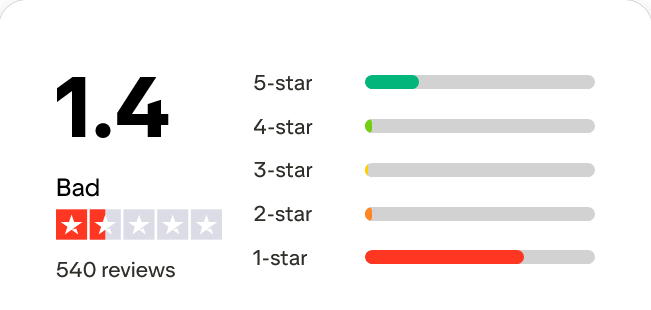
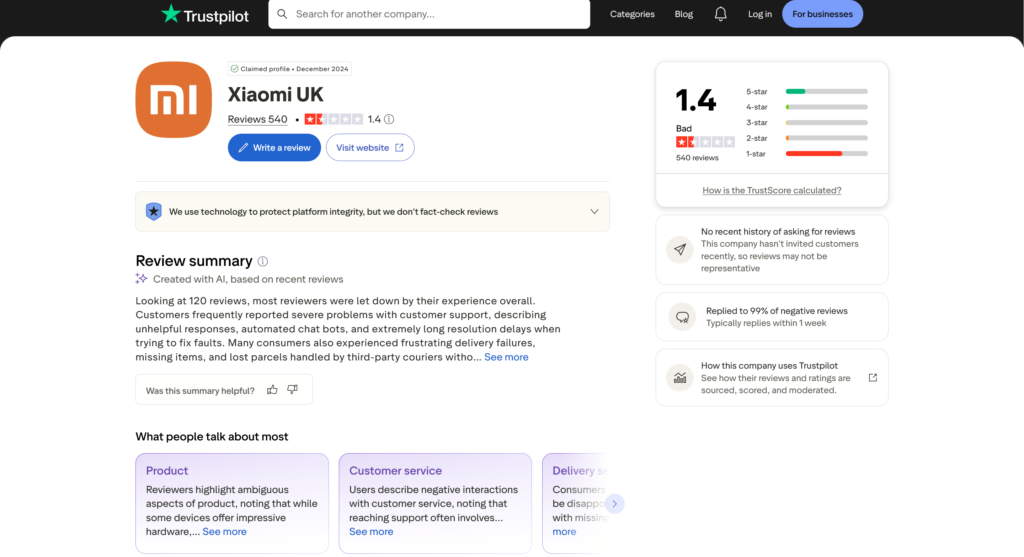
The numbers back that up. On Trustpilot, Xiaomi’s official UK profile currently sits at 1.4 out of 5 — rated “Bad” — across 540 reviews, with the one-star bracket dwarfing every other rating band.
The Complaints, in Their Own Words
The most common threads UK buyers report fall into a few repeating categories:
- Repairs and replacements that take far longer than the timelines Xiaomi advertises, sometimes stretching into months rather than weeks.
- Parcels lost by the couriers Xiaomi contracts for repairs and returns, with buyers left to chase both the courier and Xiaomi’s support team for answers.
- Warranty claims denied over technicalities — a non-official charger in the box, or damage support staff attribute to “user wear” rather than a manufacturing fault.
- Support interactions that loop through scripted chatbot responses or generic email replies before ever reaching someone who can actually resolve the issue.
- Friction buying directly from Xiaomi’s own UK storefront (mi.com/uk), including order and payment issues that wouldn’t be out of place on a much smaller retailer’s site.
Individually, none of these is unheard of. Together, and repeated across enough independent reviews, they start to look less like bad luck and more like a systemic gap between how Xiaomi markets itself and how it actually treats customers once the sale is made.
Why This Matters More in the UK Than It Might Seem
Xiaomi’s UK growth has leaned heavily on price-conscious buyers — people trading a bit of brand prestige for a lot more phone per pound. That’s a reasonable trade when the hardware holds up. It stops being reasonable the moment something goes wrong and the buyer discovers that getting it fixed is its own ordeal.
It also matters because UK consumers have real legal protections that many buyers simply don’t know to use. Under the Consumer Rights Act 2015, goods bought in the UK must be of satisfactory quality, fit for purpose, and as described — and that obligation sits with the retailer, not just the manufacturer’s own warranty terms. If you paid by credit card for an item costing more than £100, Section 75 of the Consumer Credit Act can make your card provider jointly liable if something goes wrong, which gives you a second route to a refund or repair when a retailer stalls.
None of that is Xiaomi-specific, but it’s exactly the kind of leverage that gets lost when a company’s own support channel becomes the only door a frustrated buyer knows to knock on.
What This Looks Like for a Real Buyer
Picture the common scenario: a phone develops a fault within the first year — a charging port that stops working, a screen with a persistent flicker. The buyer contacts Xiaomi support, is asked to ship the device in (often at their own initial cost, reimbursed only if the claim is approved), and then waits. In the reports that surface most often, that wait is the problem: weeks pass with no update, follow-up emails get generic responses, and when a decision finally comes back, it may be a rejection citing “accidental damage” or a non-original accessory — even when the buyer disputes that characterization entirely.
At that point, most buyers don’t know they can escalate outside of Xiaomi’s own process. They assume the warranty decision is final, when in the UK it often isn’t.
What to Do If You’re Stuck in This Exact Situation
If you’re dealing with a stalled repair or a denied warranty claim on a Xiaomi device bought in the UK, a few concrete steps make a real difference:
- Go back to the retailer, not just Xiaomi. If you bought through Amazon UK, Currys, Argos, or another retailer rather than mi.com directly, your Consumer Rights Act protections sit with that retailer first. They can’t simply point you back to the manufacturer.
- Check if Section 75 applies. If you paid by credit card and the item cost more than £100, your card issuer can be jointly liable. This is worth raising directly with your bank if Xiaomi’s own process stalls.
- Keep a written paper trail. Screenshot every support chat, log ticket numbers, and note dates. If you eventually need to escalate to the Financial Ombudsman Service (for a Section 75 claim) or a small claims process, this record is what makes your case.
- Use Trustpilot and social media as a last resort, not a first step. Public complaints sometimes get faster internal attention, but they work best after you’ve already built a documented case through official channels — not instead of one.
- Don’t assume a first rejection is final. Escalating past first-line support, in writing, and referencing your statutory rights specifically, changes the tone of these conversations more often than buyers expect.
The Bigger Picture
None of this means Xiaomi phones are a bad buy — the hardware, for the price, remains genuinely competitive, and plenty of UK buyers never run into any of this. But “great value” only holds up if the after-sales experience doesn’t quietly cancel out the savings. Right now, based on the volume and consistency of complaints circulating in the UK, that’s a real risk for anyone whose device develops a fault outside the smoothest-case scenario.
We’ll keep tracking how Xiaomi’s UK support responds to this pattern of complaints, and we’ll update this piece if the company changes its approach.