Xiaomi SKYNOMAD: Crash Tests Redefine Family SUV Safety
Xiaomi SKYNOMAD safety. # Xiaomi SKYNOMAD: Crash Tests Shatter Industry Standards, Redefining Family SUV Safety
The Chinese automotive market is hotter than ever, and for families, safety in their extended-range electric SUVs has become a huge deal. Xiaomi, always pushing boundaries, has just raised the bar significantly with its new SKYNOMAD series, also known as Pengcheng. Founder and CEO Lei Jun recently shared impressive internal crash test footage, revealing that the company’s safety criteria “vastly exceed usual industry standards.” This article dives deep into these groundbreaking tests, the technical backbone of SKYNOMAD, its safety features, and how it stacks up against tough competitors like the Li Auto L9 and Aito M9.
The Arrival of SKYNOMAD in the EREV Family SUV Segment
Xiaomi Auto, which made waves in 2024 with the SU7 sedan and later the YU7, unveiled its second product line, SKYNOMAD, on July 30, 2026. Built on the new Kunlun architecture, specifically designed for large SUVs with adaptable cabins, the SKYNOMAD series is marketed as an “intelligent and versatile living space on wheels.”
Currently, two main models are available for pre-order:
- N90 Max: This is the flagship 7-seater SUV, featuring a 2+2+3 seating arrangement. It’s a sizable vehicle, measuring around 5,285 × 1,998 × 1,825 mm with a wheelbase of 3,080 mm. The pre-sale price starts at 299,900 yuan (approximately $44,000 USD).
- N70 Max: A 5-seater SUV with all-wheel drive, it’s slightly more compact at roughly 4,960 × 1,998 × 1,875 mm and a wheelbase of 2,950 mm. Its pre-sale price begins at 259,900 yuan (around $38,400 USD).
Both SKYNOMAD models are Extended-Range Electric Vehicles (EREVs). This means they feature a 1.5T turbocharged gasoline engine (112 kW, from Harbin Dongan) that solely acts as a generator, not directly driving the wheels. This setup is paired with batteries ranging from 52-76 kWh (available in LFP or NMC chemistries depending on the version) and dual electric motors delivering up to 310 kW (416 horsepower) combined.
In terms of range, the N70 Max can achieve up to 505 km of electric driving (CLTC), while the N90 Max offers 464 km. Combined range extends to an impressive 1,705 km for the N90 Max. Performance is also brisk, with 0-100 km/h times between 5.5 and 5.9 seconds, and a top speed capped at 190 km/h. Deliveries are slated to begin in September 2026. Xiaomi is really highlighting the spaciousness, boasting a completely flat floor, seat rails up to 1,938 mm, swiveling seats, a deployable table, and even a pop-up roof option for the N90’s Camping version. But at the core of all these features, Xiaomi emphasizes that safety is the “priority foundation.”
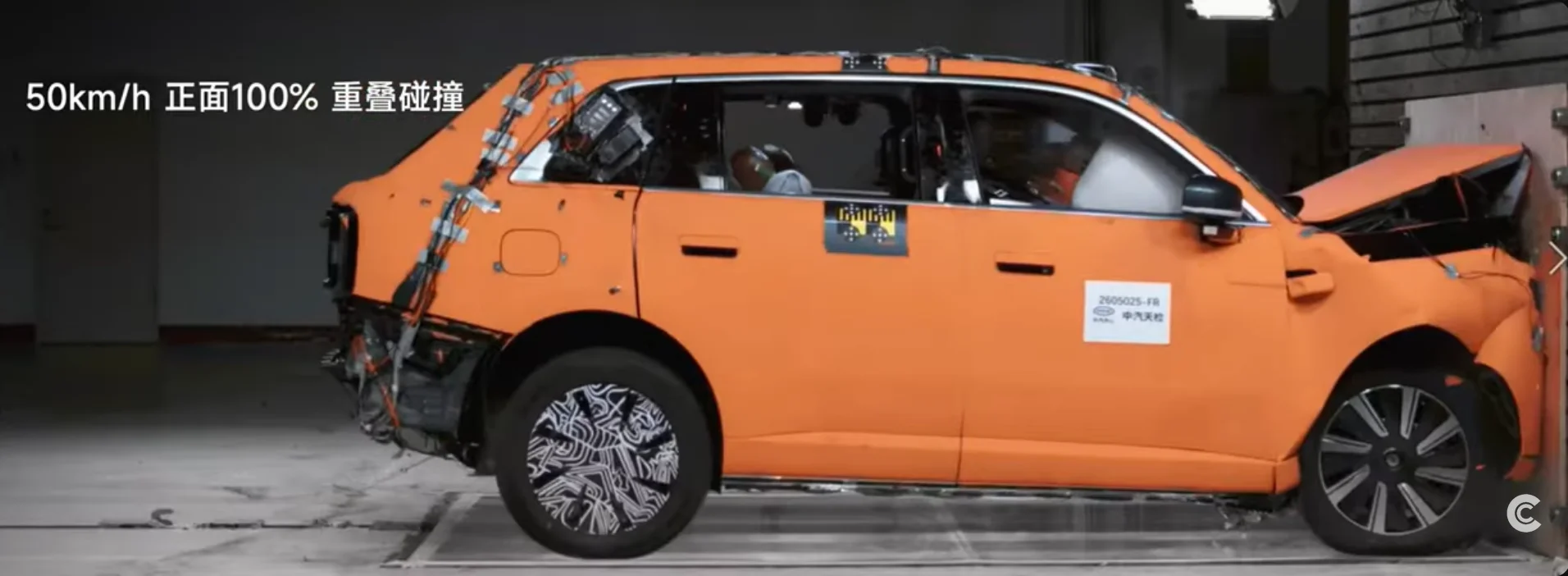
Crash Tests: Speeds Exceeding Official Benchmarks
Lei Jun detailed that Xiaomi conducted a massive number of omnidirectional crash tests for the SKYNOMAD. The key figures are particularly noteworthy:
- Frontal Collision: Tested at 64 km/h, significantly higher than the C-NCAP standard of 56 km/h.
- 25% Overlap Frontal Collision (Small Offset): Hit at 72 km/h, surpassing the C-IASI benchmark of 64 km/h.
- Side Collision: Performed at 70 km/h, well above the C-NCAP standard of 60 km/h.
- Rear Collision: Shockingly tested at 92 km/h, dwarfing the Chinese national standard of 50 km/h.
It’s important to note that these are Xiaomi’s internal development tests, not yet official public evaluations from C-NCAP or C-IASI, as the vehicles haven’t reached widespread delivery. However, these speeds clearly illustrate a commitment to exceeding established protocols.
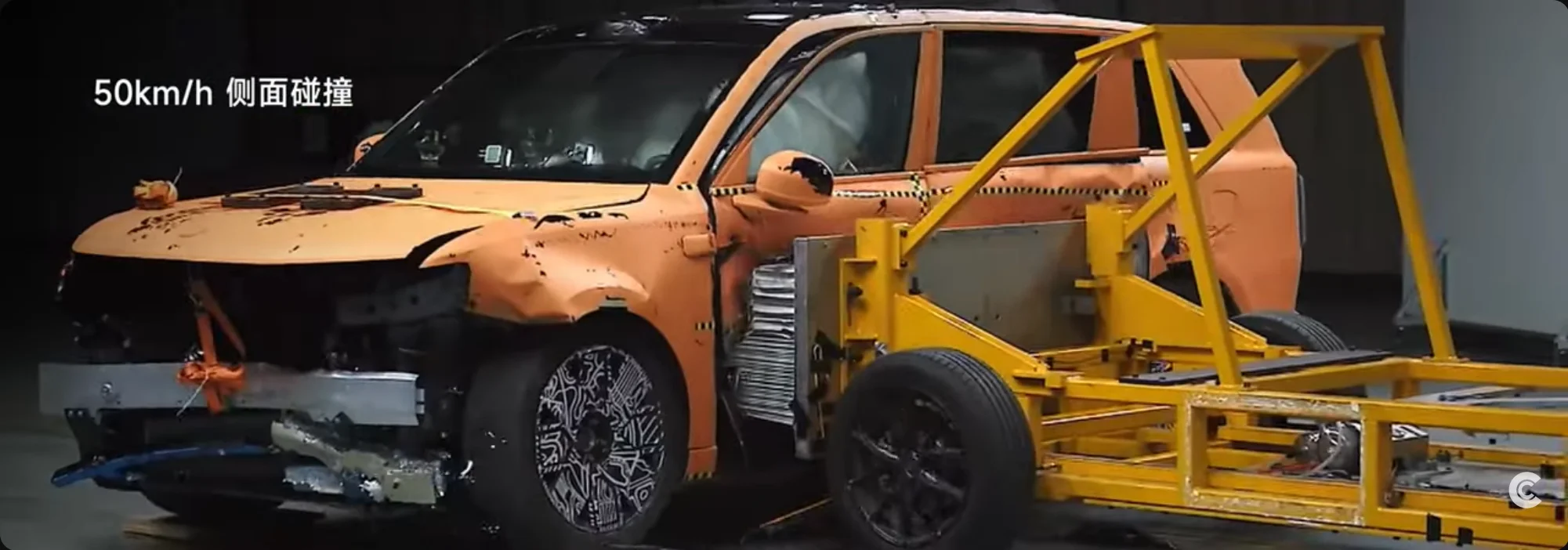
Table 1: Comparison of Crash Test Speeds (Xiaomi SKYNOMAD vs. Industry Standards)
| Type of Collision | Reference Standard | Standard Speed | Xiaomi SKYNOMAD Speed | Approximate Difference |
|---|---|---|---|---|
| Full Frontal | C-NCAP | 56 km/h | 64 km/h | +14% |
| 25% Offset Frontal | C-IASI | 64 km/h | 72 km/h | +12.5% |
| Side Collision | C-NCAP | 60 km/h | 70 km/h | +16.7% |
| Rear Collision | National Standard (GB) | 50 km/h | 92 km/h | +84% |
The energy involved in an impact increases with the square of the speed. So, a 14% increase in frontal collision speed means roughly 30% more energy needs to be managed. The leap to 92 km/h in the rear collision test is particularly aggressive, approaching scenarios seen in real-world high-speed highway accidents. This commitment to robust testing makes Xiaomi’s approach to vehicle safety very compelling.
Body Structure and Passive Safety Features
Xiaomi is really pushing its “Armor-Cage” body structure concept. This design incorporates several advanced elements:
- Ultra-High Strength Steel: Xiaomi’s own 2,200 MPa ultra-high-strength steel is used in 16 critical zones of the vehicle’s structure.
- Integrated Door Ring: A large, one-piece hot-stamped door ring extends across all three rows of seating, enveloping the A, B, C, and D pillars. Xiaomi claims this enhances lateral impact pole resistance by 19% compared to traditional welded structures.
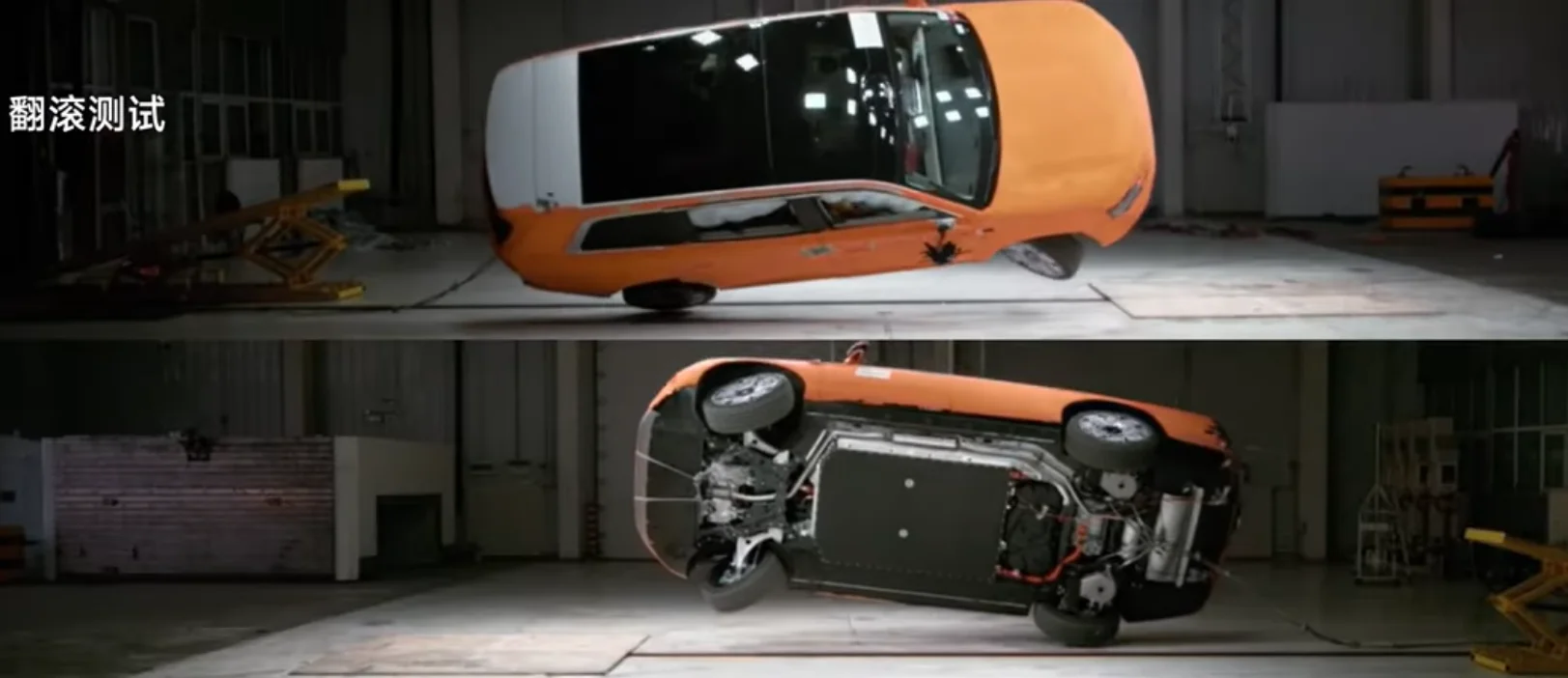
- Roof Strength: The roof is designed to withstand nearly 14 tons of crushing force.
- Airbag Count: The N90 Max is equipped with 12 airbags, likely including extended side curtain airbags and potentially knee or center airbags.
- Battery Protection: The floor boasts reinforced protection for the battery pack, described as an 18-layer structure in some reports, ensuring resistance to fire and impact.
- Material Composition: A high percentage of high-strength steel and aluminum is used in key components. Reports for previous Xiaomi models suggest over 90% in critical areas, indicating a trend towards lightweight yet incredibly strong materials.
These features align perfectly with the strategy of premium Chinese manufacturers who are increasingly using steels in the 1,500-2,200 MPa range and employing rigid cage designs with controlled deformation zones.
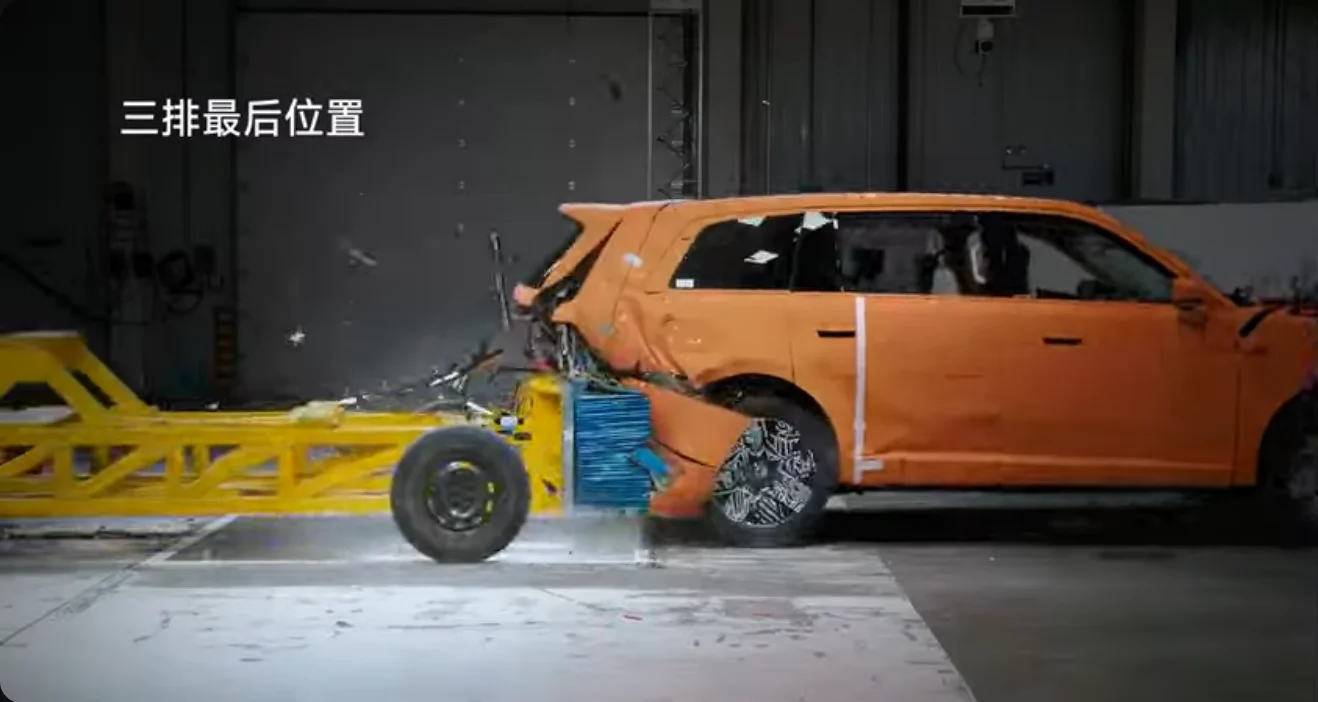
Key Passive Safety Points Highlighted by Xiaomi:
- Armor-Cage structure with 2,200 MPa steel in 16 critical areas.
- One-piece hot-stamped door ring improving lateral resistance by 19%.
- Roof crush capacity nearing 14 tons.
- 12 airbags in the flagship version.
- Enhanced protection for the battery and high-voltage systems.
- Water wading tests up to 750 mm and other robustness validations.
Comparing with Key Rivals: Li Auto L9 and Aito M9
In the highly competitive large family EREV SUV segment, Li Auto (Ideal) and Aito (Huawei-Seres) are the established giants. Both have achieved excellent official safety ratings, setting a high bar for any newcomer.
Li Auto L9 (Recent Generations):
- C-NCAP (2021/2023 Version): Achieved an overall score of 91.3%, earning a 5-star rating. It scored around 93.4% for occupant protection and an impressive 95.6% for safety assistance systems, with pedestrian protection at 75.9%.
- C-IASI: Consistently received “G” (Good) ratings across the board, including occupant protection (even in small overlap tests) and roof strength. Its high-strength structure reportedly uses over 75% high-strength steel and more than 28% hot-stamped steel in certain components.
- Additional Testing: Li Auto has also subjected its vehicles to extreme scenarios like “SUPER CRASH” tests involving trucks.
Aito M9:
- C-NCAP: Some versions have achieved scores as high as 93.9% (surpassing the L9 in some reports), also securing a 5-star rating. Occupant protection ratings can be close to 97% in certain evaluations, with very high scores for safety assistance.
- C-IASI: It has received some of the highest historical ratings (G+/G+/G+/G in 2025 reports), cementing its position as one of the safest vehicles on the market.
- Structural Design: Features a multi-load path structure, extensive use of high-strength steels, and a “basalt body” design in recent iterations.
| Model | C-NCAP (Overall) | Occupant Protection | C-IASI (Summary) | Additional Notes |
|---|---|---|---|---|
| Xiaomi SKYNOMAD | Pending | Internal tests superior | Pending | Higher internal test speeds |
| Li Auto L9 | 91.3% (5★) | ~93.4% | G in most items | Officially tested |
| Aito M9 | Up to 93.9% (5★) | ~97% in some | G+/G in top ranks | Among the highest ratings |
While Xiaomi SKYNOMAD awaits its official C-NCAP or C-IASI results, its internal development speeds suggest strong potential. For context, Xiaomi’s SU7 sedan achieved very high scores (around 93.5% in C-NCAP), building positive expectations for the SKYNOMAD. For more details on the SKYNOMAD’s launch and its positioning, you can check out Xiaomi SkyNomad EREV SUVs: Safety, Space & Versatility.
| Parameter | Xiaomi N90 Max | Xiaomi N70 Max | Li Auto L9 (approx.) | Aito M9 (approx.) |
|---|---|---|---|---|
| Entry Price (Yuan) | 299,900 | 259,900 | 400,000+ | 450,000+ |
| Length (mm) | 5,285 | 4,960 | ~5,218 | ~5,230 |
| Seating Capacity | 7 | 5 | 6 | 6 |
| Electric Range (CLTC) | 464 km | Up to 505 km | ~200-300 km (gen dep) | Variable (EREV/BEV) |
| Combined Range | Up to 1,705 km | >1,500 km | >1,000-1,400 km | Up to ~1,500 km |
| Combined Power | 310 kW | 310 kW | Similar | Similar or higher |
| 0-100 km/h Acceleration | 5.9 s | 5.5 s | ~5.3-5.5 s | Variable |
Xiaomi is clearly playing an aggressive pricing game here. They’re offering a compelling package of space, range, and technology at a significantly lower cost than the established leaders, while aiming to match or exceed them in structural safety. To understand how Xiaomi’s car strategy compares, you might find Xiaomi SU7 Ultra vs SkyNomad: Xiaomi Auto’s 2026 Strategy Revealed insightful.
Deconstructing the Metrics: What Do They Really Mean?
While Xiaomi’s higher test speeds are impressive, they don’t automatically guarantee a better official rating. C-NCAP and C-IASI assessments consider not just the vehicle’s structural integrity but also how well the dummies are protected (measuring forces on head, chest, neck, pelvis), the performance of restraint systems like seatbelts and airbags, the integrity of the high-voltage system, and ease of rescue post-collision.
However, designing and validating at higher speeds inherently requires a more robust structure and more efficient energy absorption systems. The significant increase in the rear collision test speed to 92 km/h is particularly important. High-speed rear-end collisions on Chinese highways are a real and dangerous scenario. We’re seeing a trend in the industry towards more extreme validation; for instance, the Zeekr 007 has highlighted rear crash tests at 105 km/h.
From a user’s perspective, a structure that maintains cabin integrity under higher impact energies translates to a reduced risk of intrusion and a greater chance of survival in severe accidents. When combined with the planned 12 airbags and expected active safety systems (like LiDAR and AEB, powered by the Kunlun platform), the SKYNOMAD is aiming for a holistic approach to safety. For a broader look at Xiaomi’s electric vehicle efforts, see Xiaomi Cars Singapore: What We Know About Potential Launch.
Limitations and Trust Considerations
It’s crucial to keep a few points in mind:
- Internal vs. Official: Xiaomi’s reported figures come from their internal development tests. Official C-NCAP/C-IASI results might differ.
- Anonymity in Testing: Official bodies typically purchase vehicles anonymously for testing, which helps ensure impartiality.
- Real-World Factors: Actual safety in an accident depends on many factors, including proper maintenance, seatbelt usage, the real speed of the crash, and human behavior.
- New Entrant: As a new player in the large SUV segment, Xiaomi Auto needs to demonstrate consistent production quality and long-term reliability.
Nevertheless, Lei Jun’s transparency in sharing the crash test video and specific figures builds significant confidence. The strong performance of the Xiaomi SU7 in official crash tests also bolsters the technical capabilities of Xiaomi Auto. You can explore more about the SU7’s strategy against the SKYNOMAD in Xiaomi SU7 Ultra vs SkyNomad: Xiaomi Auto’s 2026 Strategy Revealed.
Conclusion: A Potential New Benchmark in Family Safety
The Xiaomi SKYNOMAD series isn’t just about introducing an intelligent “mobile home” concept with impressive range and competitive pricing. It’s also making a bold statement on safety, with crash tests that reportedly surpass the standards set by C-NCAP, C-IASI, and national regulations. The internal testing speeds of 64 km/h (frontal), 72 km/h (25% offset), 70 km/h (side), and a remarkable 92 km/h (rear), combined with the “Armor-Cage” structure featuring 2,200 MPa steel and the integrated door ring, clearly signal Xiaomi’s intent to compete head-on with, or even surpass, established leaders like the Li Auto L9 and Aito M9.
For Chinese families seeking a spacious, reconfigurable EREV SUV that offers exceptional range and robust protection, the SKYNOMAD emerges as a compelling option to watch closely once official independent test results are released. In an industry where safety is paramount and can literally save lives, Xiaomi’s commitment to raising internal safety standards benefits the entire automotive market.
This analysis is based on information available as of August 2026. We recommend checking the official C-NCAP and C-IASI results when they become available, along with the final production specifications. For a general overview of Xiaomi’s car products, Xiaomi Cars in USA? Realistic 2026 Market Analysis offers some context.
Frequently Asked Questions
Q1: Are Xiaomi’s SKYNOMAD crash test results official?
No, the speeds announced by Lei Jun are from Xiaomi’s internal development tests. Official evaluations by bodies like C-NCAP and C-IASI are still pending.
Q2: How do SKYNOMAD’s safety features compare to its competitors like Li Auto L9 and Aito M9?
While official ratings are pending for SKYNOMAD, its internal crash test speeds exceed current industry standards. Li Auto L9 and Aito M9 have both achieved top ratings in official tests, indicating they are strong contenders in safety.
Q3: What does the “Armor-Cage” structure mean for safety?
The Armor-Cage structure utilizes ultra-high-strength steel and an integrated door ring design to create a very rigid passenger cabin. This design aims to protect occupants better by resisting deformation during severe impacts.
Q4: When will the Xiaomi SKYNOMAD be available for purchase?
Deliveries for the Xiaomi SKYNOMAD series are scheduled to begin in September 2026. Pre-orders are currently open.